EN
EN
Why does a junction box need IP68 sealing when it only sits on a wall under an eave?
A maintenance electrician was called to a gated community where the garden lights failed after every monsoon. Each time, he opened the plastic box that housed the splice, and water poured out. The box had an IP54 rating—fine for dust, but not for the horizontal rain that drove under the eave. The solution was not a bigger box, but a junction box with IP68 sealing.
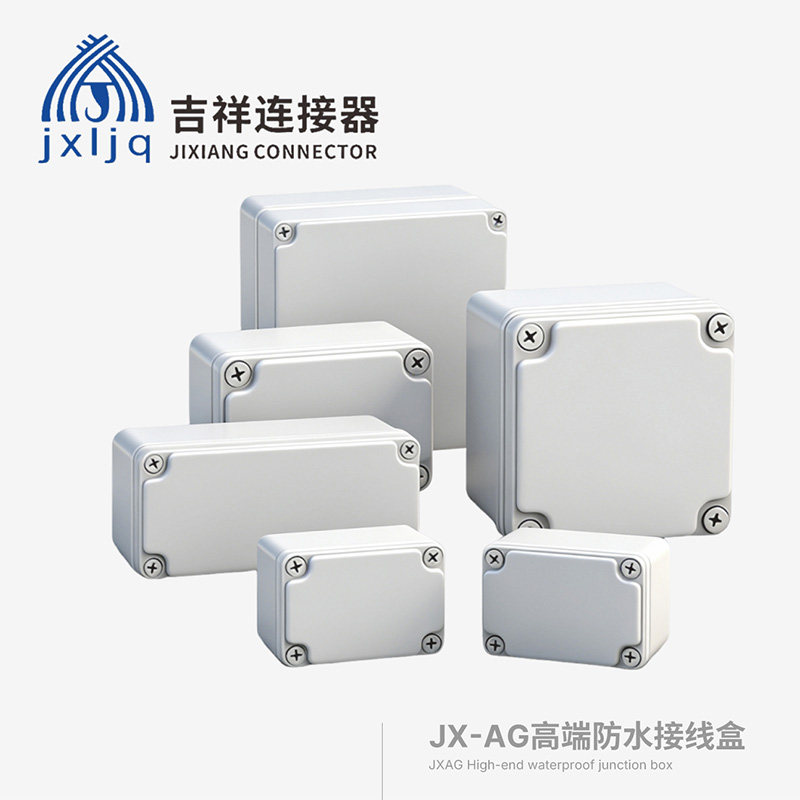
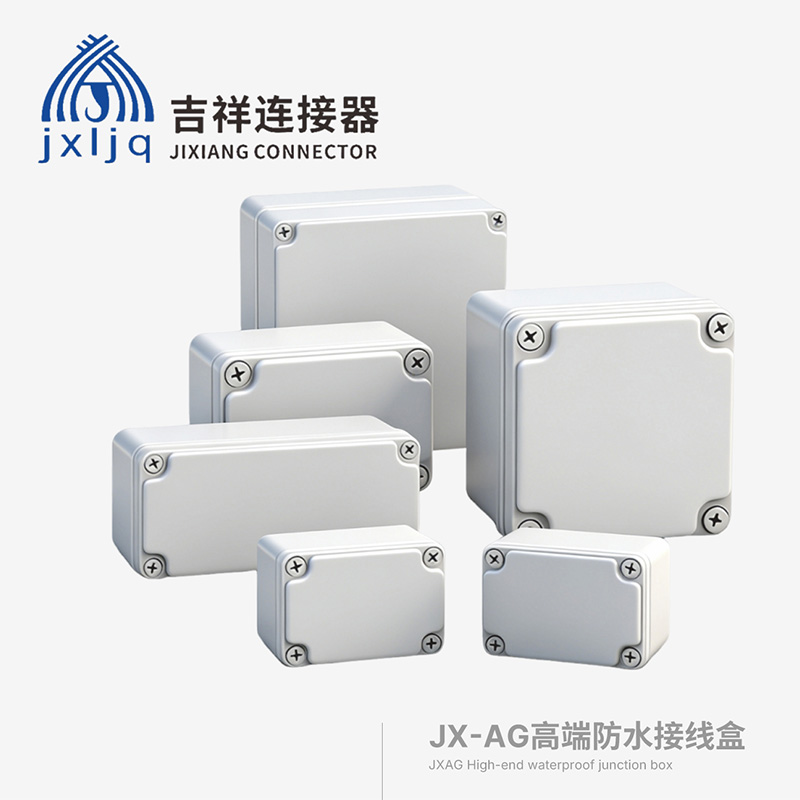
A junction box molded from high‑quality ABS or PA66 (nylon) is available in 2‑way, 3‑way, 4‑way, 5‑way, and 6‑way configurations. The IP68 rating means the box is dust‑tight and can be submerged for extended periods—a degree of protection that a light rain shower will never challenge.
This article explains why the material choice (ABS vs PA66) determines whether a junction box will crack after a decade of sunlight, how the IP68 gasket creates a seal that outlasts the building it serves, and where a 2‑way box is preferable to a 6‑way box for a simple lamp splice.
ABS vs PA66: why the plastic matters after five summers in direct sunlight
A plastic junction box that sits inside a climate‑controlled room will last indefinitely regardless of the polymer grade. A box mounted on a south‑facing wall in Arizona or on a seaside dock in the tropics will degrade. The UV component of sunlight breaks the polymer chains in ABS (acrylonitrile butadiene styrene). The surface chalking starts after two to three years, followed by microscopic cracking, and eventually the box becomes brittle. An ABS box that is not UV‑stabilized will crack when an electrician opens it for routine maintenance.
PA66 (polyamide 66, nylon) has inherently better UV resistance. The polymer absorbs less UV energy, and the chain scission rate is an order of magnitude slower. For an installation on a light pole where the junction box is directly under the lamp, the heat from the luminaire accelerates ABS degradation further. PA66 withstands both the UV and the elevated temperature. For an underground splice box where the only exposure is groundwater, ABS is sufficient and less expensive. The IP68 rating is independent of the material; both ABS and PA66 boxes are available with the same gasket design.
A 2‑way junction box is the smallest common configuration. It accepts one incoming and one outgoing cable, typically through cable glands on opposite sides. A 6‑way box has glands on multiple faces and can serve as a distribution point for several branch circuits. Using a 6‑way box where a 2‑way is sufficient wastes material and takes up unnecessary space inside a light pole base.
The IP68 gasket that keeps water out even when the box is submerged: why the lid screw torque matters
The IP68 rating of a junction box comes from a silicone or EPDM rubber gasket compressed between the lid and the base. The gasket is installed in a groove on the base, and the lid is fastened with four screws. The sealing pressure must be even around the perimeter. A single loose screw creates a gap, and the IP rating drops from 68 to something closer to IP54 (splash‑resistant).
The torque spec for the lid screws is typically 0.8‑1.2 N·m. Without a torque driver, the installer can hand‑tighten the screws until the gasket just begins to bulge out of the groove, then back off slightly. Over‑tightening can distort the plastic base, causing the gasket to extrude permanently. Under‑tightening leaves a leak path.
The box also has knockouts for cable entry. Each knockout is a thin section of plastic molded into the wall. The installer punches out the required knockouts with a screwdriver. The remaining knockouts stay in place to preserve the IP rating. A knockout that is partially cracked but not removed will let moisture enter. The installer should visually inspect all knockouts before wiring.
The terminal block inside is rated for the box's maximum current, typically 10‑20A per terminal for small boxes. The wire insertion force is designed for solid copper conductors. Stranded wire should be fitted with a ferrule to prevent splaying under the screw.
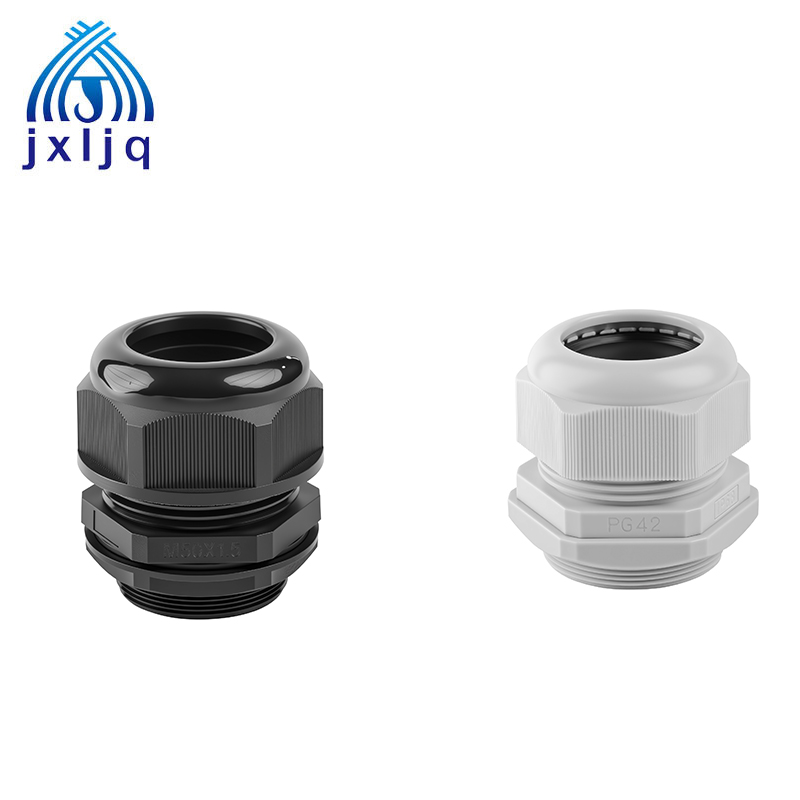
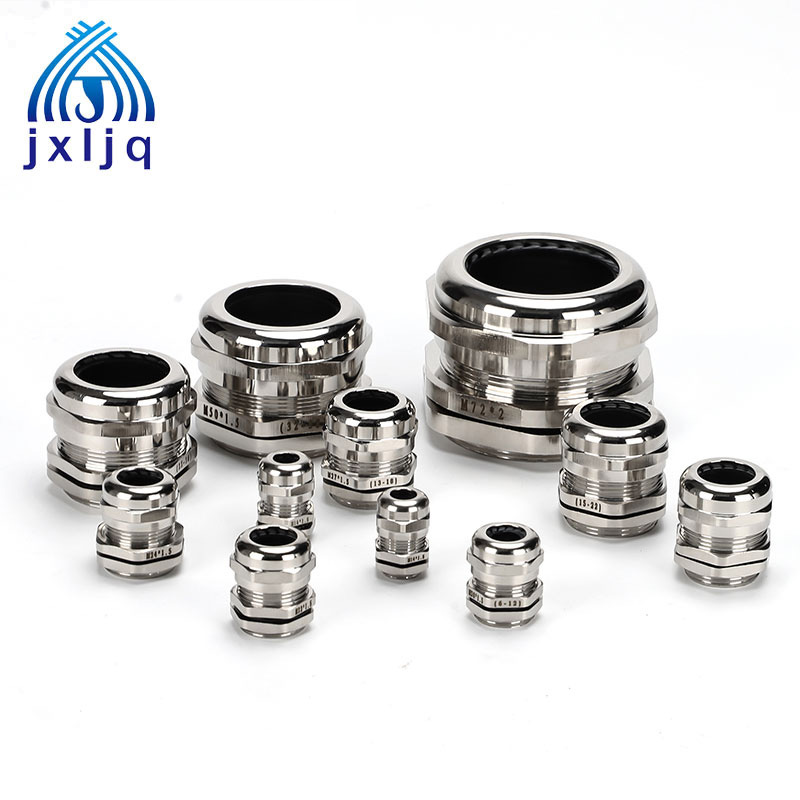
Cable glands and IP integrity: why the junction box is only as waterproof as the gland that feeds it
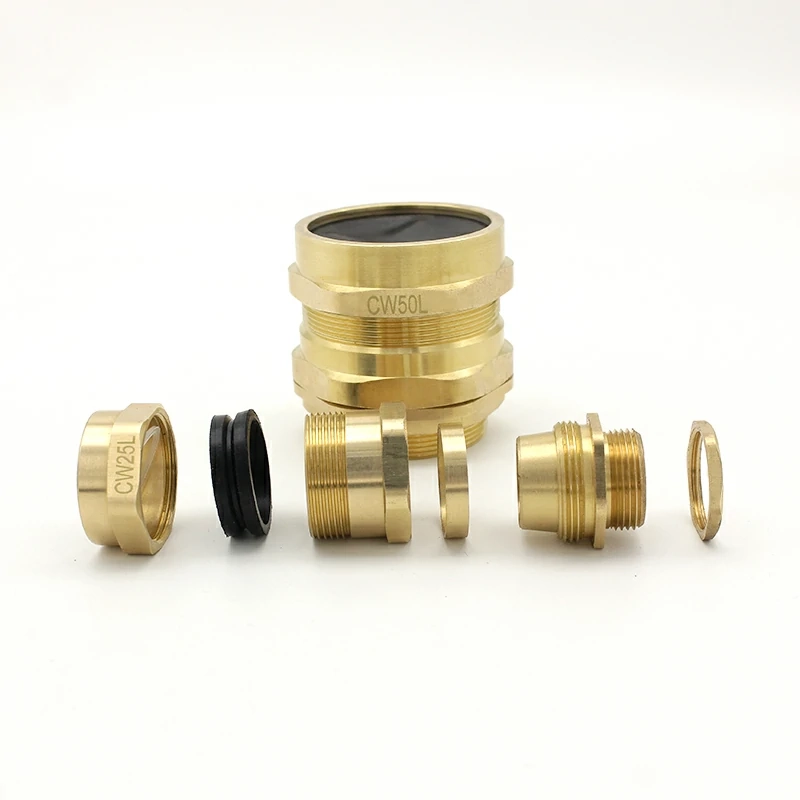
A junction box with an IP68 rating and a PG9 cable gland that is only IP54 will flood. The system IP rating is the lowest rating of any component in the sealed path. For an outdoor installation, the cable glands must match or exceed the box rating. IP68 glands have a rubber sealing insert that compresses around the cable jacket when the gland nut is tightened. The insert is sized for a specific cable diameter range.
A 2‑way junction box for a simple lamp splice might use two M20 cable glands. The installer selects a gland with a sealing range that matches the 2‑core 1.5mm² cable used for the lamp. If the cable jacket is too thin (e.g., 3mm OD), the sealing insert may not compress enough to seal. If it is too thick (e.g., 7mm OD), the insert may not fit over the cable at all. The gland manufacturer provides a cable diameter chart for each gland size.
The cable gland is also the strain relief. A pull on the cable must be transferred to the box housing, not to the terminal block. The gland nut tightens a clamp that grips the cable jacket. The junction box itself should be mounted so that the cable entry is at the bottom, creating a drip loop. Water running down the cable will drip off before reaching the gland.
| Box Configuration | Typical Use | Number of Glands |
|---|---|---|
| 2‑way | Single lamp splice, sensor connection | 2 |
| 3‑way | Light with through‑wiring to next luminaire | 3 |
| 4‑way | Cross connection, multiple sensors | 4 |
| 5‑way | Distribution point for up to 4 branch circuits | 5 |
| 6‑way | Hub for multiple downstream devices | 6 |
Terminal blocks and wire management: why a 2‑way box needs a larger terminal than a 6‑way distribution hub
Inside the junction box, terminal blocks connect the incoming and outgoing wires. The terminal size (current rating) is not the same for all box sizes. A 2‑way box feeding a single lamp needs a terminal block rated for the lamp current (typically 2‑5A). A 6‑way box distributing power to six lamps needs a terminal block rated for the sum of the branch currents, or separate terminals for each circuit.
The junction box can be configured with either screw terminal blocks or spring cage terminals. Screw terminals are slower to wire but provide higher clamping force for stranded wire without ferrules. Spring cage terminals are faster for solid wire but may loosen over time if the wire is not inserted fully.
For a splice that joins three wires of the same circuit, a simple 3‑port terminal block is used. The electrician strips each wire, inserts them into the terminal, and tightens the screw. The torque setting is low (0.5 N·m) because the terminal is seated in plastic. Over‑tightening can crack the terminal block housing.
The junction box must also accommodate the bend radius of the wires. A 6‑way box with six cables entering through six glands will have a dense bundle of wires inside. The wires must be routed so that the terminal screws are accessible. The box volume (the internal cubic space) determines how many wires can be housed without exceeding the NEC or IEC fill requirements.
Three installation errors that turn a waterproof junction box into a water collection device
Error one: Mounting the box with the cable entry pointing up
A junction box mounted on a vertical wall with the cable glands on the top side will collect water in the glands. The water runs down the cable jacket, pools at the gland entry, and eventually seeps past the sealing insert. The correct orientation has the cable entry on the bottom. If the box must be mounted with entries on the top or sides, the installer should use a drip loop (the cable is looped below the gland) so water drips off before reaching the seal.
Error two: Removing a knockout and not using the hole
An unused knockout that is left open is an IP68 failure waiting to happen. Some installers remove all knockouts “just in case,” then plug the unused holes with tape. The tape degrades, and water enters. Only remove the knockouts that will be fitted with a cable gland. For boxes with removable knockouts, a plug should be used to seal any unused opening.
Error three: Over‑tightening the lid screws and cracking the corner of the box
A plastic junction box is not a steel enclosure. The lid screws are threaded into brass inserts or directly into the plastic. Over‑tightening the screw can crack the plastic corner. A cracked corner is impossible to seal, and the box must be replaced. The correct torque is “snug plus a quarter turn,” not “as tight as possible.”
How the Plastic Junction Box fits into a contractor’s outdoor lighting inventory
JIXIANG Connector has manufactured waterproof junction boxes and cable glands for over 12 years. The Plastic Junction Box line is available in ABS or PA66 with 2‑6 way configurations and IP68 sealing for outdoor lighting, security cameras, access control, marine electrical systems, industrial control panels, and underground cable splices.
The ABS version suits indoor and sheltered outdoor installations where UV exposure is minimal. The PA66 version is recommended for continuous outdoor exposure, direct sunlight, and high‑temperature environments. Both materials meet UL94 V‑2 flame rating, with V‑0 available on request. Operating temperature range is -40°C to +100°C, covering cold rooftop winters and hot attic summers. CE and IP68 certified. Custom color and logo available on orders over 5,000 units.
A junction box that uses the correct material for the installation environment, seals with an IP68 gasket, and is fitted with matching IP68 cable glands will keep water out of a splice for the life of the building. For an electrician who has replaced too many flooded garden light splices, the JIXIANG Plastic Junction Box delivers the ingress protection that keeps the callbacks away.
【Request a quote from JIXIANG Connector】
Send JIXIANG your required box configuration (2‑6 way), cable count, and environment (indoor, sheltered outdoor, or direct sunlight) to receive a Plastic Junction Box recommendation with the correct material choice and IP68 gland set.