EN
EN
How Does an Explosion-Proof Cable Gland Protect Against Flame Propagation?
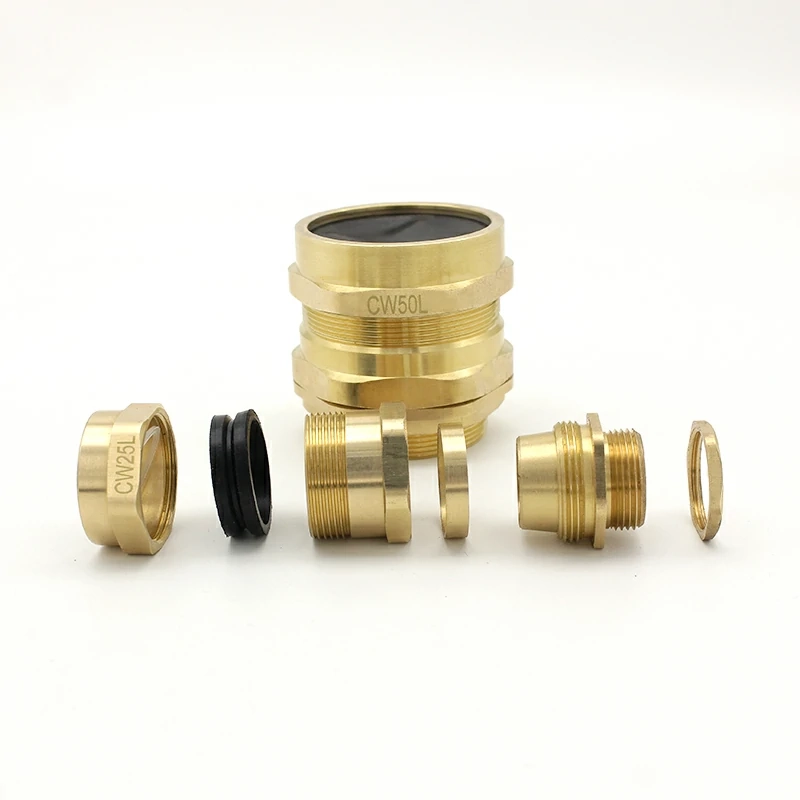
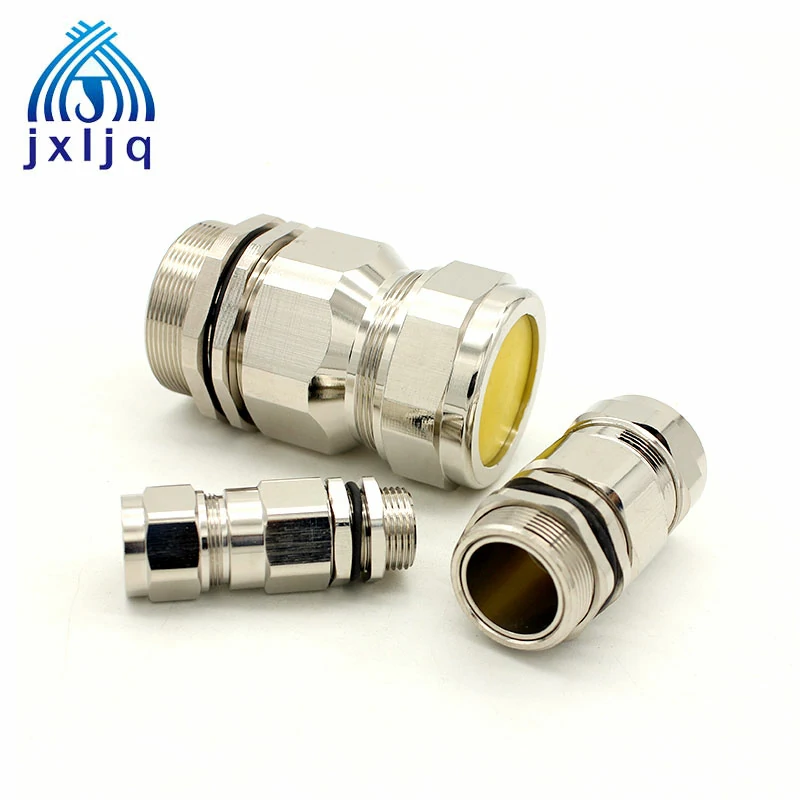
You're specifying cable entries for equipment in a hazardous area — a chemical plant, an oil refinery, a grain processing facility, or a mine. The environment contains explosive gases or dust. A standard cable gland won't do. An explosion-proof cable gland is designed to seal the cable entry point and prevent flames from propagating from inside the equipment to the outside atmosphere — or vice versa. The JX1 series from JIXIANG is one example: a single-seal explosion-proof gland with dual-layer clamping and single-layer armor grip, offering IP66 protection and operating from -40°C to 100°C. This guide covers what makes an explosion-proof cable gland different, the key specifications to look for, and how to select the right one for your hazardous area installation.
Sealing, Clamping, and Flameproofing – The Three Functions That Define Explosion-Proof Performance
An explosion-proof cable gland performs three functions simultaneously. First, it seals the cable entry point against ingress of moisture, dust, and contaminants — maintaining the enclosure's IP rating. Second, it clamps the cable securely, providing strain relief and preventing pull-out. Third — and most critically — it prevents flame propagation. In the event of an internal explosion within the enclosure, the gland must contain the flames and prevent them from escaping to the external atmosphere where they could ignite a larger explosion. The JX1 series achieves this through a single-seal design with dual-layer clamping and single-layer armor grip, delivering superior sealing performance and high load-bearing capacity.
Single-Seal Design with Dual-Layer Clamping
The JX1 series uses a single-seal design that simplifies installation while maintaining explosion-proof integrity. The dual-layer clamping system provides superior grip on the cable, ensuring it stays securely in place even under vibration or mechanical stress.
Single-Layer Armor Grip for Armored Cables
For armored cable applications, the JX1 series provides a single-layer armor grip that secures the armor layer while maintaining the explosion-proof seal. This ensures that the armor remains electrically bonded and the cable stays securely anchored.
Brass, Nickel Plating, and Stainless Steel – Material Choices That Match Your Environment
The JX1 series is available in multiple material configurations to suit different environmental requirements.
Nickel-Plated Brass – The Standard Choice
Nickel-plated brass is the standard material for most industrial applications. The nickel plating provides corrosion resistance while the brass body offers strength and machinability.
Stainless Steel 304 and 316L – For Corrosive Environments
For applications requiring superior corrosion resistance — marine environments, chemical plants, or offshore installations — the JX1 series is available in SS304 and SS316L. Stainless steel provides excellent resistance to corrosion and is suitable for the most demanding environments.
Material Selection Based on Application
The choice of material depends on the environment: standard industrial applications typically use nickel-plated brass; corrosive environments require stainless steel; and applications requiring high mechanical strength may specify SS316L.
Thread Options, Temperature Limits, and IP Ratings – Specifications That Define Performance
The JX1 series is available with multiple thread options, a wide temperature range, and IP66 protection.
Thread Options – Metric, G, PG, and NPT
The JX1 series supports Metric, G, PG, and NPT threads [5†L12]. This broad compatibility ensures you can find the right gland for your specific equipment, whether you're working with European, UK, or North American standards.
Temperature Range – -40°C to 100°C
The JX1 series operates reliably from -40°C to 100°C [6†L10]. This wide temperature range covers everything from cold outdoor installations to high-temperature industrial processes, ensuring consistent sealing performance across diverse climates.
IP66 Protection
The JX1 series offers IP66 protection [6†L4][6†L9]. IP66 provides dust-tight sealing and protection against powerful water jets, making the gland suitable for outdoor installations and washdown environments.
Zone 1, IIA, IIB, and IIC – Where Explosion-Proof Glands Are Mandatory
Explosion-proof cable glands are required in specific hazardous area classifications where explosive gas atmospheres are present.
Zone 1 Hazardous Locations
Zone 1 locations are areas where an explosive gas atmosphere is likely to occur in normal operation occasionally. The JX1 series is suitable for Zone 1 hazardous locations [5†L12-L13][6†L14-L15].
IIA, IIB, and IIC Explosive Gas Atmospheres
The glands are approved for use in IIA, IIB, and IIC explosive gas atmospheres [5†L12-L13][6†L15]. IIC is the most severe classification, covering gases like hydrogen and acetylene.
Typical Applications
JX1 series glands are used in explosion-proof electrical equipment connections across chemicals, petroleum, electricity, light industry, machinery, and automation engineering [5†L13-L16].
Key Technical Specifications
| Specification | JX1 Series Value | Why It Matters |
|---|---|---|
| Explosion-proof mark | Exd II | Flameproof enclosure for hazardous areas [6†L8-L9] |
| Protection grade | IP66 | Dust-tight and water jet protection [6†L9] |
| Working temperature | -40°C to 100°C | Wide climate adaptability [6†L10] |
| Material options | Nickel-plated brass, SS304, SS316L | Environmental compatibility |
| Thread options | Metric, G, PG, NPT | International standard compatibility [5†L12] |
| Suitable for | Zone 1, IIA, IIB, IIC | Hazardous area classifications [5†L12-L13] |
| Seal design | Single seal | Simple installation [5†L4-L5] |
| Clamping | Dual-layer | Secure cable retention [5†L7] |
| Armor grip | Single-layer | Armored cable compatibility [5†L7] |
What Engineers Look for in an Explosion-Proof Cable Gland
What is the difference between an explosion-proof cable gland and a standard cable gland?
A standard cable gland provides sealing and strain relief but does not prevent flame propagation. An explosion-proof cable gland is designed to contain flames and prevent them from escaping the enclosure in the event of an internal explosion, making it mandatory in hazardous areas.
What hazardous area classifications is the JX1 series suitable for?
The JX1 series is suitable for Zone 1 hazardous locations and IIA, IIB, and IIC explosive gas atmospheres [5†L12-L13][6†L14-L15].
What are the available thread options?
The JX1 series supports Metric, G, PG, and NPT threads [5†L12].
What is the temperature range?
The JX1 series operates from -40°C to 100°C [6†L10].
What materials are available?
The JX1 series is available in nickel-plated brass, SS304, and SS316L to suit different environmental requirements.
Let's Match an Explosion-Proof Cable Gland to Your Hazardous Area Classification
Selecting an explosion-proof cable gland comes down to three factors: hazardous area classification (match your zone and gas group), thread type (match your equipment), and material (match your environment). Contact JIXIANG for a customized quote → —their team can help you select the right JX1 series configuration for your specific hazardous area installation.
With over 15 years of experience in waterproof cable connector manufacturing, JIXIANG provides high-quality explosion-proof cable glands for hazardous area applications. The JX1 Explosion-Proof Cable Gland features a single-seal design with dual-layer clamping and single-layer armor grip, Exd II explosion-proof mark, IP66 protection, and an operating temperature range of -40°C to 100°C. Available in nickel-plated brass, SS304, and SS316L with Metric, G, PG, and NPT thread options. Applications include Zone 1 hazardous locations, IIA/IIB/IIC explosive gas atmospheres, and explosion-proof electrical equipment connections in chemicals, petroleum, and industrial sectors. JIXIANG provides comprehensive technical support, data sheets, installation guides, and after-sales service. Connect with JIXIANG to discuss your thread requirements, hazardous area classification, and material specifications.