EN

Can an Explosion-proof Cable Gland Simplify SWA Termination?
Yes—when the gland uses a detachable armour cone to spread the steel wires evenly before the clamping ring closes. An Explosion-proof Cable Gland in the CW series combines that cone with a single compression seal, so the installer completes the armour clamp and the outer sheath seal in one tightening sequence. This article explains how the armour cone works, what the earth tag contributes to the bonding path, and what to verify when you're specifying a CW gland for an Ex d enclosure.
How Does the Detachable Armour Cone Work?
Spreading the Armour Before Clamping
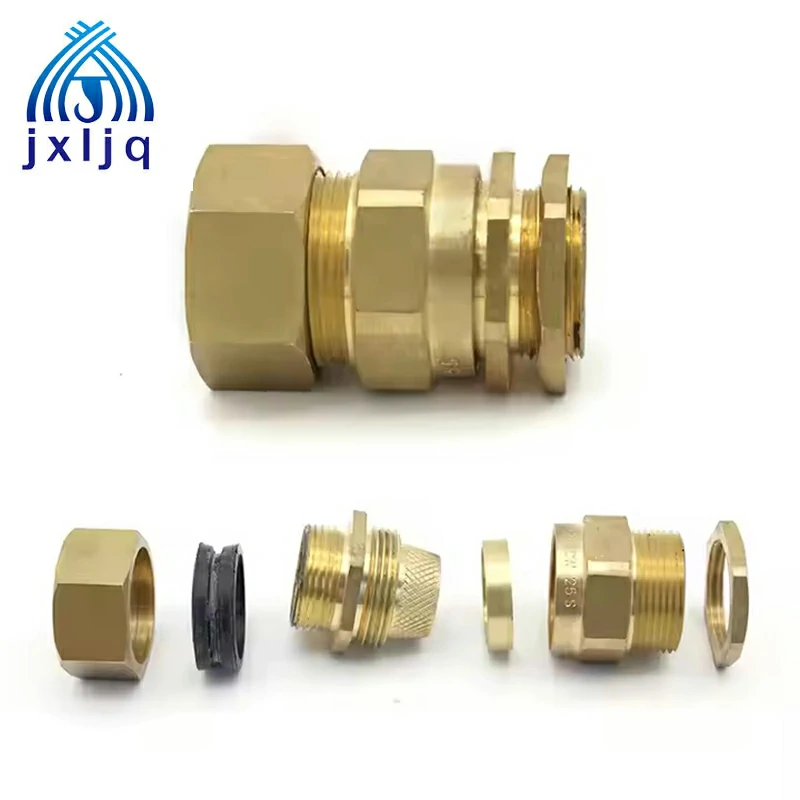
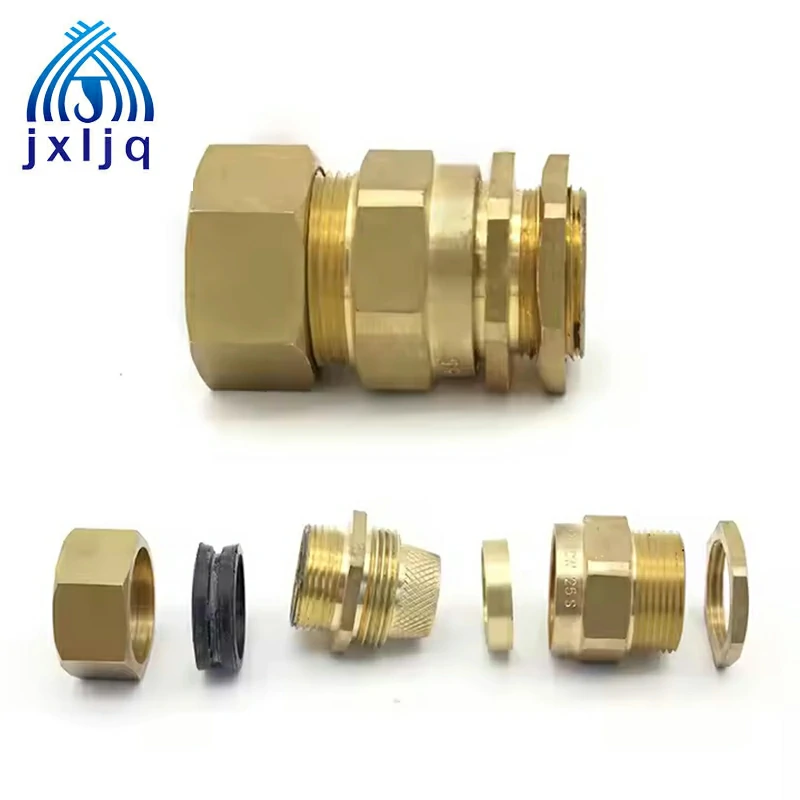
The CW gland separates into five components: the entry component, the detachable armour cone, the clamping ring, the body, and the outer seal nut. The installer threads the cable through the entry component, positions the armour cone, and spreads the steel wires evenly around the cone surface.
That even spread is what makes the termination reliable. If the armour wires are bunched on one side, the clamping ring grips unevenly, and the earth bond becomes a high-resistance path. The cone gives the wires a defined surface to sit against, so the clamp closes onto a uniform layer of armour.
Single Tightening Action for Seal and Clamp
Once the armour is seated on the cone, the body is tightened onto the entry component until all available threads are used. The outer seal nut then tightens onto the cable sheath until it reaches a metal-to-metal stop against the body. That single sequence completes both the armour clamp and the IP66/IP67 outer seal.
The gland doesn't require a separate sealing operation or a second compression step. The body draws the clamping ring onto the cone while the outer nut compresses the sheath seal, so the mechanical and environmental functions are established together.
What Does the Earth Tag Contribute to the Bonding Path?
The armour clamp provides the primary electrical bond between the SWA armour and the gland body. The earth tag adds a dedicated connection point for an external earth conductor, which is tightened onto the earth bolt with finger pressure before the final seal tightening.
That two-path bonding arrangement matters in hazardous areas. The armour clamp handles the normal earth continuity, and the earth tag provides a visible, testable connection for the installation's protective conductor. If the enclosure is painted at the gland entry, the paint can interrupt the earth path through the body—the earth tag gives the installer a direct bonding point that doesn't rely on the enclosure surface.
| Parameter | CW Series Specification |
|---|---|
| Type | CW (Single Compression Gland) |
| Material | Brass, with or without nickel plating |
| Standard | BS6121 |
| Protection Class | IP66 & IP67 |
| Temperature Range | -20°C to +80°C |
| Thread Options | Metric, NPT, BSP & PG |
| Application | Indoor or outdoor use with all types of SWA cables |
| Accessories | PVC shrouds, locknuts, earth tags |
| Cable Range (Small) | 11.8–17.8mm (JX-CW20S) |
| Cable Range (Large) | 63.5–73.0mm (JX-CW75S) |
Why Does Brass Construction Suit Hazardous-Area Service?
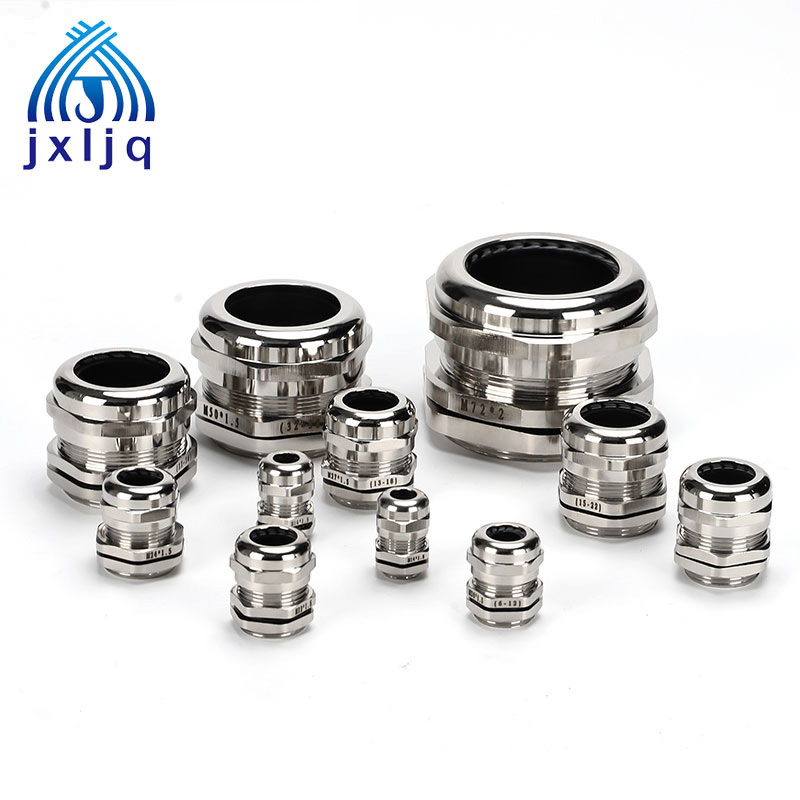
The CW body is brass, with an optional nickel-plated finish. Brass provides the mechanical strength to clamp the steel wire armour without cracking the threads or deforming the clamping ring. The nickel plating adds a corrosion-resistant surface for installations exposed to moisture, salt, or chemical vapors.
The temperature range is -20°C to +80°C, which covers the ambient conditions in most industrial and outdoor hazardous-area installations. For higher-temperature applications, a different seal material or a high-temperature variant would be required.
Where Does the CW Gland Fit in Hazardous-Area Installations?
The CW series is specified for indoor or outdoor use with all types of SWA cables in Zone 1 hazardous locations and IIA, IIB, IIC explosive gas atmospheres. That covers chemical plants, petroleum facilities, and industrial electrical equipment connections where the cable entry must maintain the enclosure's explosion protection.
The gland is used with Ex d equipment, where the cable entry device must maintain the flameproof integrity of the enclosure. The brass construction and armour clamp provide the mechanical and electrical characteristics that the Ex d protection concept requires, and the CW series is available with ATEX and IECEx certifications for these applications.
What Should You Check Before Specifying a CW Gland?
How do I match the cable diameter to the gland size?
The CW series covers cable ranges from 11.8mm to 17.8mm on the smallest size (JX-CW20S) up to 63.5mm to 73.0mm on the largest (JX-CW75S). Measure the cable's outer sheath diameter and select the gland whose range places that diameter near the middle, not at the extreme. A gland running at the edge of its range has less margin for sheath variation.
What thread type does my enclosure require?
The CW series offers Metric, NPT, BSP, and PG threads. Match the thread to the enclosure entry. Metric threads are common on European equipment; NPT is standard in North America; BSP and PG appear on older or specialty enclosures. Confirm the thread standard and pitch before ordering.
What accessories complete the installation?
The CW series is supported by PVC shrouds, locknuts, and earth tags. The locknut secures the gland against the enclosure wall, the earth tag provides an additional grounding point, and the PVC shroud protects the gland from mechanical damage and corrosion. Specify these accessories with the gland to avoid a second order.
What maintenance does the gland need?
Inspect the armour clamp for secure engagement during periodic maintenance. A clamp that has loosened allows the cable to move, which stresses the seal and the conductors. Check the compression nut for tightness and the seal for cracks or hardening. Clean the brass or nickel-plated surface with a damp cloth—abrasive cleaners can scratch the plating and create paths for corrosion.
Straight Answers on CW Glands
What does "single compression" mean?
Single compression means the gland has one sealing element that compresses against the cable's outer sheath. That's different from a double compression gland, which has separate seals for the outer sheath and the inner bedding. The single compression design is simpler and suits SWA cable where the outer sheath is the primary environmental barrier.
Can the CW gland be used on unarmoured cable?
The CW gland is designed for SWA (steel wire armour) cable, and the armour cone is a core part of its function. For unarmoured or braided cable, a different gland type—such as a single compression gland without the armour cone—is the appropriate choice.
What is the temperature rating?
The standard temperature range is -20°C to +80°C. That covers the ambient conditions in most industrial and outdoor installations. For higher-temperature applications, a different seal material or a high-temperature variant would be required.
Does the gland come with a certification?
The CW series is built to BS6121, the British standard for cable glands. Jixiang's broader product range carries CE, ISO9001, TUV, ATEX, and IECEx certifications, and the explosion-proof variants are marked for Ex d applications. Confirm the specific certificate for your order, especially if the installation requires a notified body certificate for the Ex d assessment.
Let's Match a CW Gland to Your Hazardous-Area Cable
Share Your Cable Diameter, Thread, and Area Classification
An Explosion-proof Cable Gland in the CW series should match your cable's outer sheath diameter, the enclosure thread, and the hazardous-area classification—not the other way around. The CW ex proof cable gland from Jixiang delivers BS6121 compliance, IP66/IP67 sealing, a brass body with optional nickel plating, and a detachable armour cone for even SWA clamping from 11.8mm to 73.0mm across Metric, NPT, BSP, and PG threads. The -20°C to +80°C range and Zone 1 / IIA IIB IIC suitability cover chemical, petroleum, and general industrial installations. If you're terminating armoured cable in a hazardous area, send us your cable diameter and thread requirements — we'll help you confirm the right CW size and accessories before you order.