EN

How Does an EMC Cable Gland Block Interference?
You've routed a shielded cable into a control cabinet, and the shield is doing its job along the cable run. But at the point where the cable passes through the enclosure wall, there's a gap — a break in the shielding that lets electromagnetic interference slip through. An EMC Cable Gland closes that gap by bonding the cable shield to the enclosure with 360-degree contact, turning a weak point into a sealed, conductive entry. This article explains how the shielding contact works, what the nickel-plated brass construction delivers, and what to verify when you're selecting one for an industrial installation.
Why Does a Standard Gland Leak Interference?
The Gap at the Enclosure Entry
A cable shield is a conductive layer — foil, braid, or a combination — that surrounds the conductors and blocks external electromagnetic fields from coupling into the signal lines. Along the cable run, the shield is continuous. But where the cable enters an enclosure, the shield has to be terminated. If the termination isn't a full 360-degree bond to the enclosure wall, the shield becomes an antenna at that point.
Electromagnetic waves can slip through that gap and couple onto the conductors inside the enclosure. The result is noise, signal errors, or intermittent faults in sensitive electronics. A standard cable gland holds the cable mechanically and seals it against dust and water, but it doesn't necessarily bond the shield to the enclosure.
What 360-Degree Contact Changes
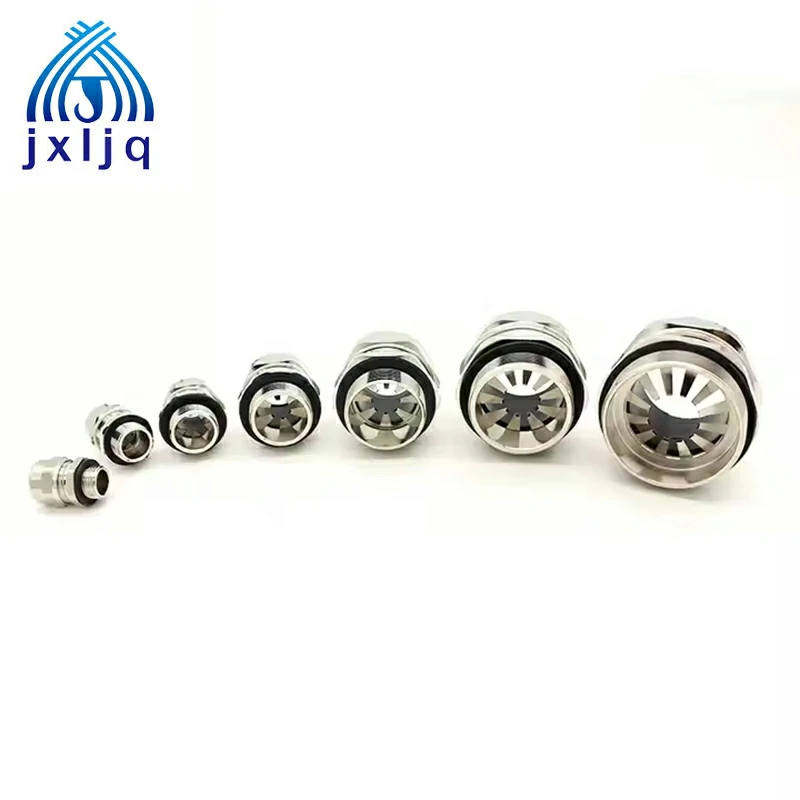
An EMC-rated gland makes contact with the cable shield around its entire circumference. Instead of a single grounding point, the shield is bonded to the gland body through a conductive contact element — a spring, a sleeve, or a contact ring — that presses against the braid or foil.
That full-circumference contact creates a low-impedance path from the shield to the enclosure wall. Interference that reaches the entry point is shunted to ground rather than passing through to the interior. The shielding integrity of the cable run is maintained through the enclosure boundary.
How Does the Contact Element Engage the Shield?
Spring-Loaded Contact and Conical Compression
The contact mechanism in an EMC gland typically uses a spring-loaded element that compresses against the stripped cable shield when the gland is tightened. As the compression nut turns, a conical component presses the contact spring inward, reducing its diameter until it seats firmly on the exposed braid or foil.
The spring design accommodates slight variations in cable diameter and shield thickness. Even if the cable is slightly out of round or the braid isn't perfectly uniform, the spring maintains contact around the full circumference. That reliability matters in field installations where cable tolerances aren't perfectly controlled.
Bonding to the Enclosure Wall
The shield-to-gland contact is only half the path. The gland body itself has to bond electrically to the enclosure wall. A conductive gasket or a serrated contact surface at the gland-to-enclosure interface ensures that the connection is low-resistance. Without that bond, the interference has nowhere to go — it reaches the gland body but can't dissipate into the enclosure ground.
| Parameter | EMC Brass Cable Gland (F Series) |
|---|---|
| Material | Nickel-plated brass |
| Working temperature (static) | -40°C to 100°C, short-time up to 120°C |
| Working temperature (dynamic) | -20°C to 80°C, short-time up to 100°C |
| Protection degree | IP68, 10 Bar (with O-ring) |
| Sealing material | NBR O-ring |
| Fastener | Nylon PA |
| Compliance | Halogen, phosphorus, and cadmium free; RoHS compliant |
| Thread types | PG, Metric, NPT |
| Cable range | 3mm to 30mm depending on thread size |
What Does Nickel-Plated Brass Deliver?
Corrosion Resistance and Mechanical Strength
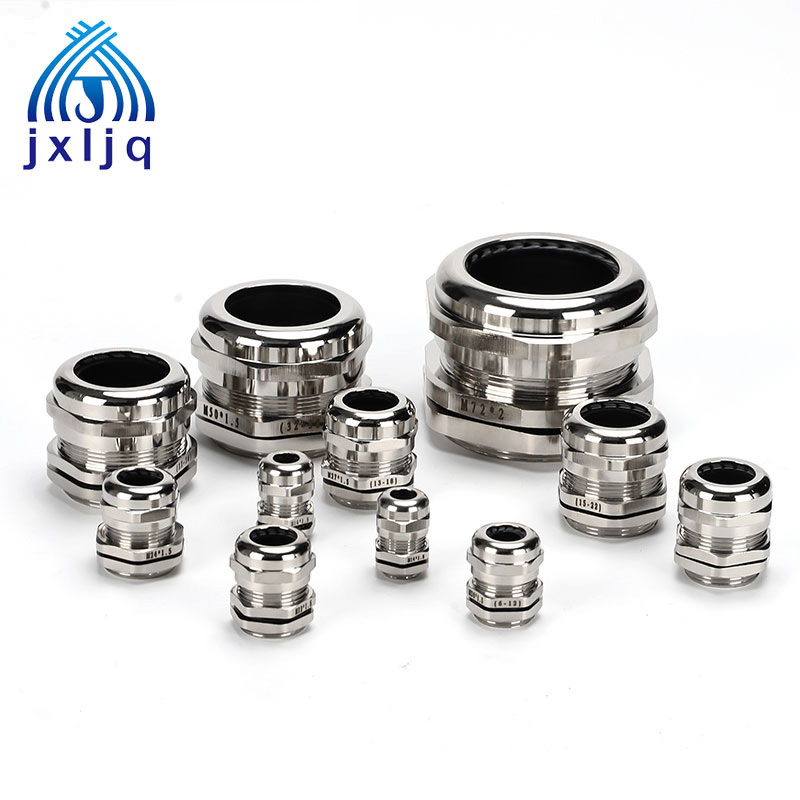
The gland body is made from nickel-plated brass. Brass provides the mechanical strength to withstand tightening torque and cable pull without deforming, while the nickel plating adds corrosion resistance. In industrial environments where moisture, cleaning chemicals, or salt exposure are present, the plating protects the brass substrate from oxidation and pitting.
The plating also contributes to the EMC performance. Nickel is conductive and maintains a stable contact surface at the gland-to-enclosure interface. A bare brass surface can develop a resistive oxide layer over time, which raises the impedance of the bonding path. Nickel plating resists that oxidation, keeping the bond consistent.
IP68 Sealing in the Same Package
The EMC function doesn't come at the expense of environmental protection. The gland carries an IP68 rating at 10 Bar when the O-ring is properly seated. The NBR O-ring seals against the cable jacket, and the gland body seals against the enclosure wall.
That combination matters in outdoor and washdown installations. A gland that provides EMC bonding but allows moisture ingress would create a corrosion path that degrades the shield contact over time. The IP68 seal protects both the enclosure interior and the integrity of the EMC connection.
Where Do Shielded Glands Get Installed?
Control Cabinets, VFDs, and Sensitive Electronics
EMC glands show up wherever a shielded cable enters an enclosure that houses sensitive electronics. Variable frequency drives (VFDs) are a common example — the motor cable carries high-frequency switching noise, and the shield has to be bonded at both the drive end and the motor end to contain that noise. The gland at the enclosure entry is the bonding point at the drive end.
Other applications include PLC cabinets, instrumentation panels, communication equipment enclosures, and any installation where electromagnetic compatibility is a requirement rather than an afterthought. The common thread is a cable shield that needs to remain effective through the enclosure boundary.
Industrial, Marine, and Outdoor Environments
The nickel-plated brass construction and IP68 rating make these glands suitable for harsh environments:
-
Industrial automation — factory floor cabinets exposed to dust, vibration, and cleaning agents
-
Marine and offshore — salt spray exposure where corrosion resistance is critical
-
Outdoor installations — weather-exposed enclosures for telecom, traffic control, and renewable energy
-
Food and beverage — washdown areas where stainless steel glands are also used, but nickel-plated brass offers a cost-effective alternative
-
Chemical processing — areas with moderate chemical exposure where the nickel plating resists attack
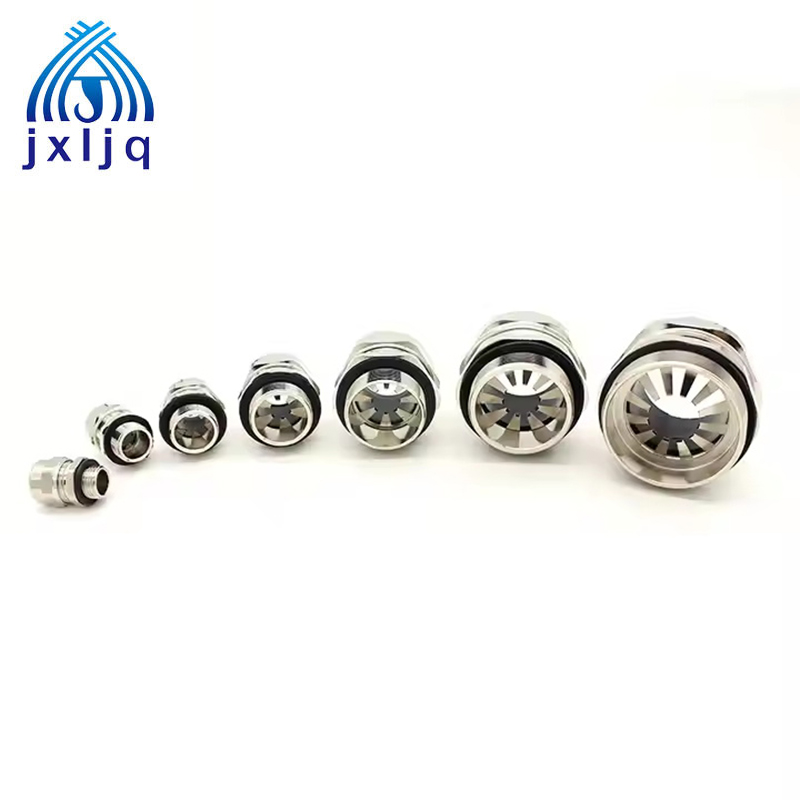
A EMC Cable Gland like the F series from Jixiang covers a range of thread sizes including PG7 through PG36, with cable ranges from 3mm to 30mm depending on the thread. The product is halogen-free, phosphorus-free, and cadmium-free, and it meets RoHS requirements.
What Should You Check Before Selecting a Gland?
How do I match the thread to my enclosure?
Identify the thread type and size of the enclosure entry hole. The F series offers PG threads from PG7 to PG36. Match the gland's thread to the enclosure's tapped hole or the clearance hole with a locknut. If your enclosure uses metric or NPT threads, check the manufacturer's catalog for the corresponding EMC gland version.
What cable range do I need?
Measure the cable's outer jacket diameter. The gland's cable range must cover that diameter with enough clamping margin to seal properly. A range like 3-5.3mm means the gland seals on cables with jacket diameters between those two values. If the cable is at the extreme edge of the range, the seal may be marginal — choose a range that puts your cable near the middle.
What's the difference between static and dynamic temperature ratings?
The static rating applies when the cable is fixed and not moving. The dynamic rating applies when the cable flexes or moves during operation. Static applications can use the full -40°C to 100°C range (short-time up to 120°C). Dynamic applications are limited to -20°C to 80°C (short-time up to 100°C) because the flexing motion stresses the seal and the contact element differently. Match the rating to your application's movement profile.
Does the gland need a separate earth tag?
Some EMC glands include an internal grounding mechanism that bonds the shield to the gland body, which then bonds to the enclosure. Others rely on the shield contact element and the gland-to-enclosure bond alone. If your application requires a dedicated earth connection — for example, a visible bonding conductor — check whether the gland has a provision for an earth tag or a separate grounding lug. The F series uses internal shield contact; if a separate earth tag is required, verify with the manufacturer.
What Do Installers Ask About Shielded Glands?
How much of the cable shield should be exposed?
Expose enough shield to make full contact with the gland's contact element, but not so much that the shield is exposed outside the gland. The contact element needs a clean, undamaged section of braid or foil to press against. Fold the shield back over the cable jacket before tightening if the gland design requires it, or slide the contact spring under the braid according to the manufacturer's instructions.
What causes EMC performance to degrade over time?
The most common cause is corrosion at the shield-to-gland contact point. If moisture reaches the contact area, the shield braid can oxidize, raising the contact resistance. The IP68 seal protects against that, but if the gland is installed without the O-ring or the seal is damaged, moisture ingress accelerates corrosion. Check the O-ring during installation and replace it if it's cut or deformed.
Can I use an EMC gland on an unshielded cable?
You can, but the EMC function does nothing. The gland will still provide mechanical retention and IP68 sealing, but there's no shield to bond. Using an EMC gland on unshielded cable is a waste of the additional cost unless you're standardizing on one gland type for inventory simplification.
How do I verify the bond is effective?
A continuity test between the cable shield and the enclosure wall confirms that the bond is low-resistance. Measure the resistance from the exposed shield to a bare metal point on the enclosure. A reading in the milliohm range indicates a good bond. A reading that's significantly higher suggests a loose contact, a corroded interface, or a missing conductive gasket.
Let's Match a Shielded Gland to Your Enclosure
Share Your Thread Size and Cable Diameter
An EMC Cable Gland should match your enclosure thread, cable jacket diameter, and environmental exposure — not the other way around. The EMC Brass Cable Gland F series from Jixiang uses nickel-plated brass construction with a spring-loaded shield contact for 360-degree EMC bonding, an IP68 seal rated to 10 Bar, and an operating range of -40°C to 100°C in static applications. Thread sizes run from PG7 to PG36, covering cable ranges from 3mm to 30mm. If you're specifying shielded cable entries for control cabinets, VFD installations, or outdoor enclosures, send us your thread size and cable diameter — we'll help you confirm the right gland configuration before you order.