EN

How Does a Waterproof Cable Gland Hold IP68?
You're routing a cable into an outdoor control box or a washdown panel, and the entry point is where water finds its way in. A Waterproof Cable Gland prevents that ingress by compressing a rubber seal around the cable jacket and against the enclosure wall, closing the gap that a bare cable entry leaves open. The sealing performance reaches IP68-10 BAR, meaning the gland resists continuous submersion under 10 bar of pressure. This article explains how the compression seal works, what the nylon body and EPDM insert contribute to durability, and what to verify when you're specifying a gland for an exposed or high-moisture installation.
How Does the Gland Compress the Seal?
The Claw and Rubber Insert
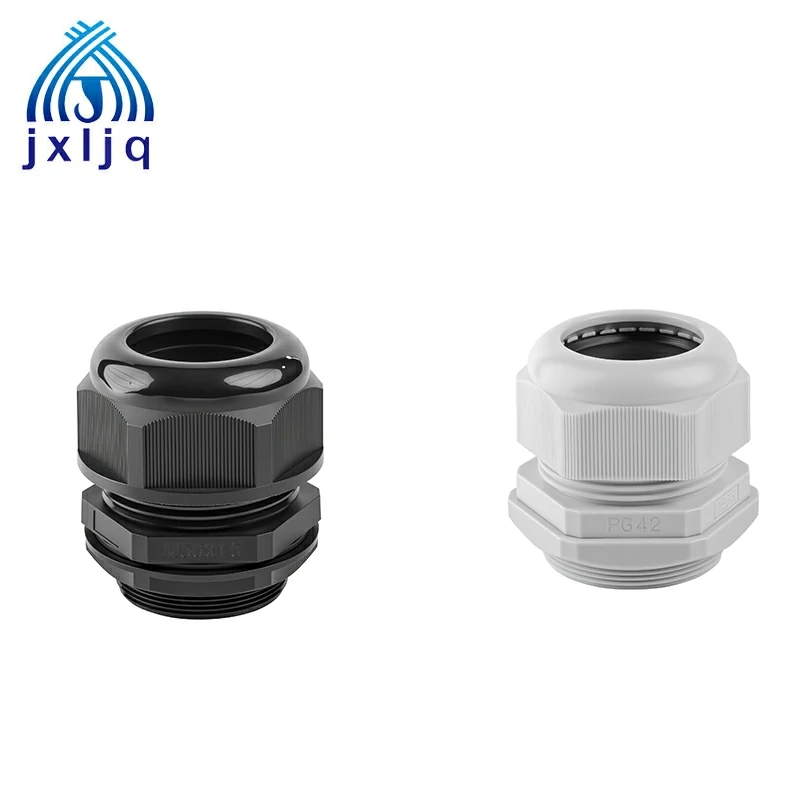
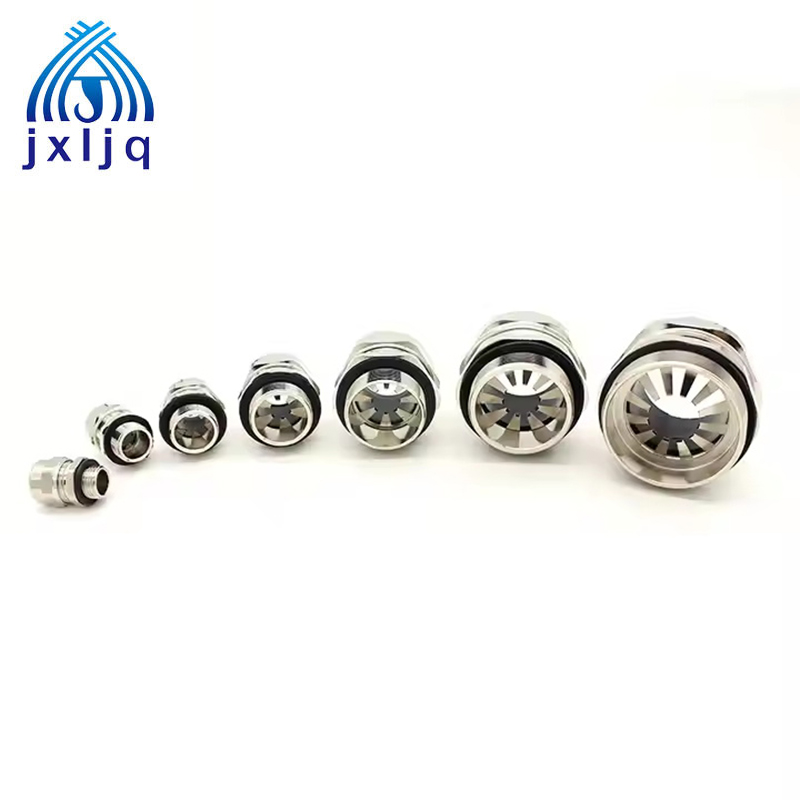
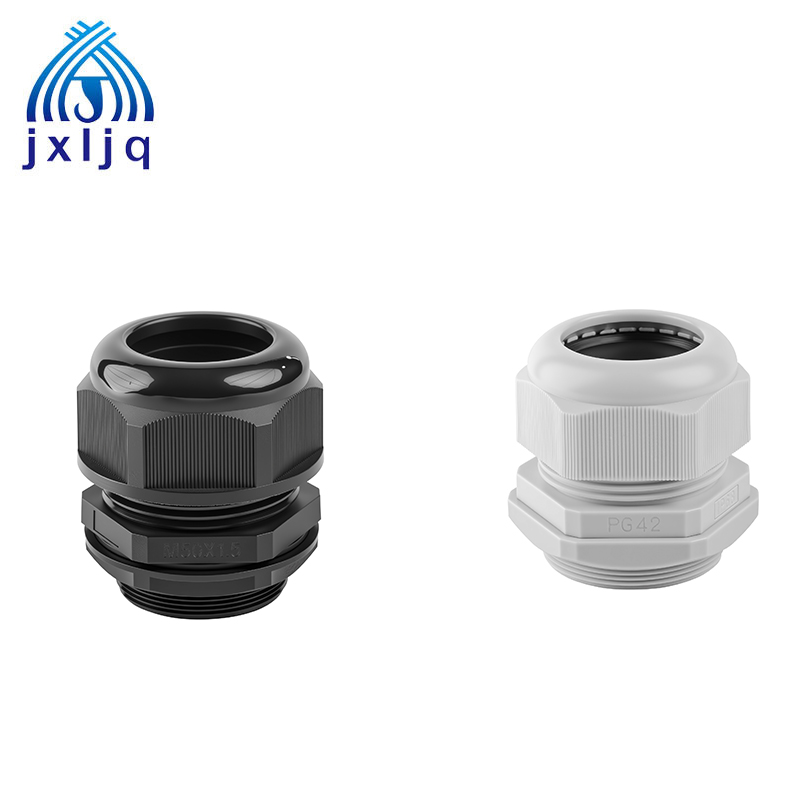
A waterproof cable gland is built around two sealing elements: the claw and the rubber insert. The claw is a set of flexible nylon fingers that grip the cable jacket when the sealing nut is tightened. The rubber insert sits behind the claw and compresses against the cable as the nut advances, closing the annular gap between the cable and the gland body.
The sealing nut tightens with a “click” sound when it reaches the correct compression. That audible feedback tells the installer the seal is fully engaged, and the nut can be re-opened for re-entry without damaging the thread. The NBR rubber insert is the primary barrier—it’s the material that conforms to the cable jacket and maintains contact under thermal cycling.
Thread Sealing and the O-Ring
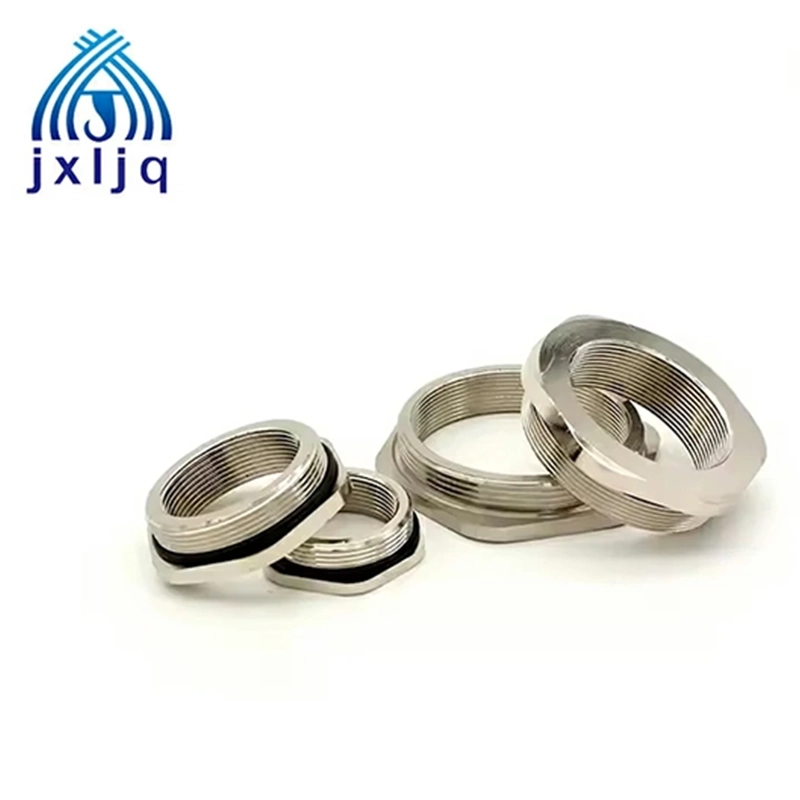
The gland’s external thread screws into the enclosure wall, and an O-ring sits at the base of the thread to seal the gland-to-enclosure interface. That O-ring is what separates an IP68 gland from a standard cable entry: without it, water can migrate along the thread and into the enclosure even if the cable seal is tight.
The IP68 rating applies when both seals are intact—the cable insert compressed and the O-ring seated against the enclosure surface. If either is compromised, the ingress protection drops.
What Do the Nylon Body and NBR Insert Resist?
Nylon PA66 and PA6 Options
The gland body is made from Nylon PA66 or Nylon PA6, depending on the series. Nylon provides mechanical strength, electrical insulation, and resistance to common industrial chemicals.
Nylon also resists salt water, weak acid, alcohol, oil, grease, and common solvents. That resistance is what allows the gland to survive outdoor installations, marine environments, and food processing washdowns without cracking or degrading.
NBR Rubber for Temperature and Chemical Resistance
The sealing insert is NBR rubber. NBR holds its elasticity across the gland’s operating temperature range and resists the same chemicals that the nylon body handles. For applications with extreme temperatures or aggressive chemicals, a super rubber option is available that extends resistance to high temperature and strong acid/alkali exposure.
| Parameter | Nylon Waterproof Cable Gland |
|---|---|
| Body material | Nylon PA66 / PA6 |
| Seal material | NBR rubber |
| Protection degree | IP68 – 10 BAR |
| Static temperature | -40°C to 100°C, short-term to 120°C |
| Dynamic temperature | -20°C to 80°C, short-term to 100°C |
| Thread types | Metric, PG, G (PF), NPT |
| Cable range | 3–6.5mm (M12) up to 42–51mm (PG63) |
| Colors | Black (RAL9005), Gray (RAL7035), custom on request |
| Certifications | CE, RoHS, ISO9001 |
What Thread and Cable Range Options Exist?
Metric, PG, G, and NPT Threads
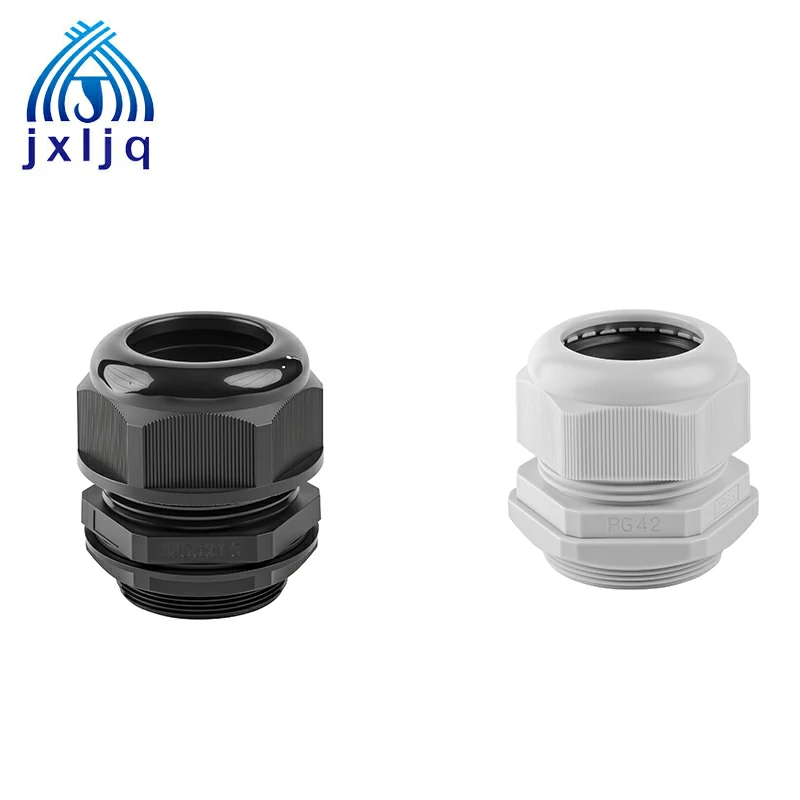
The gland is available with Metric, PG, G (PF), and NPT threads. Metric threads (M12, M16, M20, M25, M32, M40, M50, M63) are the standard in European and Asian equipment. PG threads (PG7 through PG63) are common in older European designs. G threads (G1/4 through G2) and NPT threads (NPT1/4 through NPT1) cover North American and fluid-power applications.
The thread length also varies by size: 8mm on M12 and M16, 9mm on M20, and up to 27mm on PG63. Matching the thread length to the enclosure wall thickness prevents the gland from bottoming out before the O-ring seats.
Cable Range and Spanner Size
Each gland size covers a specific cable range. The M12 handles 3–6.5mm cable; the M20 covers 6–12mm; the M25 extends to 13–18mm; and the PG63 reaches 42–51mm. The spanner size scales with the body diameter, from 16mm on M12 up to 83mm on PG63. Choosing the right range keeps the NBR insert compressed within its elastic limit—too wide a range and the seal won’t compress enough; too narrow and the insert may be over-compressed and split.
Where Does a Waterproof Gland Fit in Industrial Enclosures?
A Waterproof Cable Gland sits at every point where a cable enters an enclosure that must stay sealed. That covers outdoor junction boxes, marine panels, food processing washdown areas, wastewater treatment cabinets, and any installation where moisture, dust, or chemical splash is present.
The nylon body suits environments where a metal gland would corrode or where electrical insulation at the entry point is required. The IP68 rating covers temporary submersion, so the gland is specified for equipment that may be hosed down or exposed to standing water.
What Should You Verify Before Selecting a Gland?
How do I match the thread to my enclosure?
Measure the enclosure entry thread or the knockout diameter. Metric, PG, G, and NPT threads are not interchangeable—an M20 gland won’t seal in a PG16 hole. Confirm the thread standard and pitch before ordering. If the enclosure has a clearance hole rather than a threaded entry, a locknut is required on the inside to compress the O-ring.
What cable range do I need?
Measure the cable’s outer jacket diameter. Select a gland whose range places that diameter near the middle, not at the extreme. An M20 gland with a 6–12mm range handles an 8mm cable comfortably; a 10mm cable is near the upper limit and leaves less margin for jacket variation.
What temperature rating applies to my installation?
The static rating of -40°C to 100°C applies when the cable is fixed and not moving. The dynamic rating of -20°C to 80°C applies when the cable flexes or moves. If the gland is mounted on a moving arm or a vibrating surface, use the dynamic rating. For short-term excursions, the static rating extends to 120°C and the dynamic to 100°C.
What maintenance does the gland need?
Inspect the NBR insert for cracks or hardening during periodic maintenance. A seal that has lost elasticity won’t compress properly even when the nut is tight. Check the O-ring at the enclosure interface for flattening or cuts. Clean the thread and the sealing surfaces before re-assembling. The nylon body can be wiped with a damp cloth—abrasive cleaners can scratch the surface and create paths for moisture.
Straight Answers on Waterproof Glands
What does IP68-10 BAR actually mean?
IP68 means the enclosure is dust-tight and protected against continuous immersion in water. The 10 BAR specification defines the pressure of that immersion: the gland is tested to withstand water pressure equivalent to a 100-meter depth. That’s far beyond what most outdoor enclosures see, which is why IP68 is the standard for exposed and washdown installations.
Can the gland be used with flat or flexible cables?
The NBR insert is designed to compress around round cable jackets. Flat cables and highly flexible cables with irregular surfaces may not seal evenly, leaving gaps at the corners. For those cable types, a gland with a specialized insert profile is required. Confirm the cable cross-section with the supplier before specifying a standard round-jacket gland.
Why does the sealing nut click?
The “click” is a mechanical detent that signals the nut has reached its designed compression. It gives the installer a tactile and audible confirmation that the seal is engaged, without relying on a torque wrench. The nut can be backed off and re-tightened for re-entry, and the click will repeat as long as the thread and detent are undamaged.
What’s the difference between PA66 and PA6?
Both are nylon grades with similar chemical resistance and temperature performance. PA66 has a higher melting point and better mechanical strength at elevated temperatures. PA6 offers slightly better impact resistance at low temperatures. The choice depends on the specific series and the mechanical demands of the installation; both meet the same IP68 sealing specification.
Let's Seal Your Enclosure Entry Points
Share Your Thread Size and Cable Range
A Waterproof Cable Gland should match your enclosure thread, cable jacket diameter, and environmental exposure—not the other way around. The nylon cable gland range from Jixiang covers Metric, PG, G, and NPT threads with IP68-10 BAR protection, NBR sealing, and a static temperature range of -40°C to 100°C. The claw-and-insert design grips the cable firmly, and the O-ring seals the enclosure interface for outdoor and washdown installations. If you’re specifying glands for control cabinets, marine panels, or food processing equipment, send us your thread size and cable range — we’ll help you confirm the right configuration before you order.