EN
EN
How Do Cable Accessories Reducers Solve Thread Mismatches?
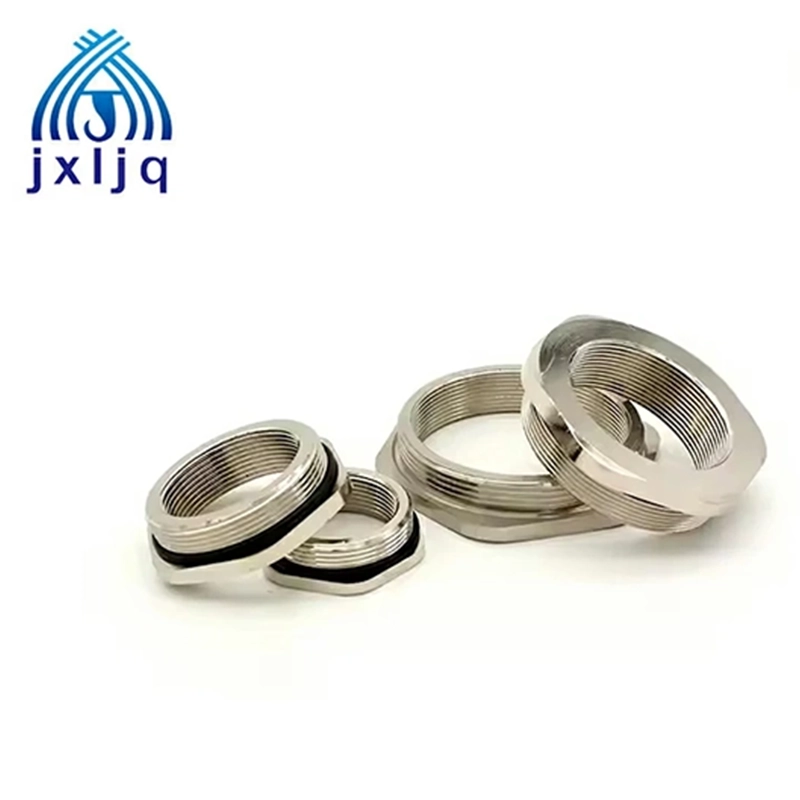
You're installing a cable gland into an enclosure, and the threaded entry hole is larger than the gland's connection thread. Rather than re-drilling the enclosure or ordering a custom gland, a Cable Accessories reducer bridges the gap — stepping a larger outer thread down to a smaller inner thread. The JX series from Jixiang covers Metric, PG, and NPT thread systems in nickel-plated brass, SS304, and SS316L. This article explains how reducers work, how to match thread sizes, and what to consider when selecting materials for your environment.
What Does a Thread Reducer Actually Do?
Converting Larger Entries to Smaller Glands
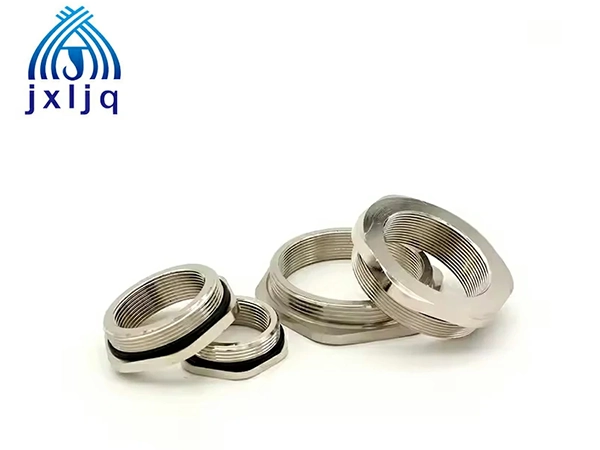
A reducer is used when the dimensions of existing tapped holes are too large for a given gland. It provides a means of connection between cable entry devices and equipment having different threads. The reducer's outer thread matches the enclosure's tapped hole, while its inner thread matches the gland's connection thread. That two-sided design lets you install a smaller gland into a larger entry point without modifying the enclosure.
The distinction between a reducer and an adapter matters here. A reducer has a female thread smaller than its male thread. An adapter may have a female thread the same size or larger. If your enclosure has an M32 entry and your gland has an M25 thread, you need a reducer — the female side steps down. If both threads are the same size but different standards, you may need an adapter instead.
Protection and Temperature Ratings
The JX reducer series carries an IP65 protection rating, meaning it resists water and dust ingress when properly installed. The operating temperature range runs -40°C to 100°C, with temporary tolerance up to 120°C. These ratings matter in outdoor installations, washdown environments, and industrial settings where temperature swings are common.
Which Material Should You Choose for Your Environment?
Brass, SS304, and SS316L
The JX series offers three material options, and the choice depends on the installation environment:
-
Nickel-plated brass — the standard choice for general industrial and commercial enclosures. Nickel plating adds corrosion resistance and a clean appearance.
-
SS304 — stainless steel for food processing, pharmaceutical, and outdoor installations where moisture and cleaning chemicals are present.
-
SS316L — the highest corrosion resistance in the series, recommended for marine, chemical, and chloride-rich environments.
For chloride-containing media, SS316L is the preferred choice because of its higher resistance to pitting and stress corrosion cracking. If your enclosure sits near saltwater, in a chemical plant, or in an area with frequent washdown using aggressive cleaners, step up to SS316L. For standard indoor control panels, nickel-plated brass handles the job.
| Thread Standard | Outer Thread (D1) | Inner Thread (D2) | Hex Size (D) mm | Thread Length GL (mm) |
|---|---|---|---|---|
| Metric | M16×1.5 | M12×1.5 | 18 | 6 |
| Metric | M20×1.5 | M16×1.5 | 24 | 6.5 |
| Metric | M25×1.5 | M20×1.5 | 30 | 7.5 |
| Metric | M32×1.5 | M25×1.5 | 40 | 8 |
| Metric | M40×1.5 | M32×1.5 | 43 | 9 |
| Metric | M50×1.5 | M40×1.5 | 57 | 10 |
| Metric | M63×1.5 | M50×1.5 | 64 | 10 |
| PG | PG9 | PG7 | 17 | 6 |
| PG | PG11 | PG9 | 20 | 6.5 |
| PG | PG13.5 | PG11 | 22 | 6.5 |
| PG | PG16 | PG13.5 | 24 | 6.5 |
| PG | PG21 | PG16 | 30 | 7.5 |
| PG | PG29 | PG21 | 40 | 8 |
| PG | PG36 | PG29 | 50 | 9 |
| PG | PG42 | PG36 | 57 | 10 |
| PG | PG48 | PG42 | 64 | 10 |
| NPT | NPT1/2" | NPT3/8" | 24 | 6.5 |
| NPT | NPT3/4" | NPT1/2" | 30 | 7.5 |
| NPT | NPT1" | NPT3/4" | 40 | 8 |
| NPT | NPT1-1/4" | NPT1" | 50 | 9 |
How Do You Match Thread Sizes Across Standards?
Reading the Part Number
The JX part number encodes the thread conversion directly. Take JX-M32/25A-RE as an example: M32 is the outer thread that screws into the enclosure, M25 is the inner thread that accepts the gland, and "RE" indicates reducer. The "A" and "B" suffixes denote different hex profiles within the same thread pair.
The size range covers M16 down to M12 on the metric side, all the way up to M63 down to M50. PG threads run from PG9/PG7 through PG48/PG42. NPT threads span NPT1/2"-NPT3/8" to NPT1-1/4"-NPT1". That coverage handles the majority of industrial cable entry applications.
What Accessories Work with a Reducer?
Locknuts and Sealing Washers
The JX series reducer pairs with a locknut and a sealing washer. The locknut secures the reducer against the enclosure wall and prevents it from loosening under vibration. The sealing washer sits between the reducer and the enclosure surface, maintaining the IP65 seal.
When you're ordering reducers, specify the locknut and washer as separate accessories if they're not included. The locknut thread matches the reducer's outer thread, and the washer diameter matches the reducer's hex size. Matching these three components — reducer, locknut, and washer — ensures the assembly seals properly and stays tight.
A Cable Accessories reducer like the JX series from Jixiang includes options for both A and B hex profiles within each thread size, giving you flexibility in how the assembly fits against the enclosure wall.
What Comes Up Before You Order a Reducer?
How do I identify my enclosure thread size?
Check the equipment nameplate, drawings, or the existing cable entry device for the thread size and type. The thread callout usually follows the format "M32×1.5" for metric, "PG16" for PG threads, or "NPT3/4" for NPT. If you're unsure, measure the outer diameter of the threaded hole with a caliper and compare it against a thread chart.
What's the difference between an A and B hex profile?
The A and B suffixes indicate different hexagon dimensions for the same thread pair. The difference is in the across-flats measurement and the height of the hex body. Both perform the same thread conversion function, but one may fit better in tight spaces or against a specific enclosure surface. If you have a space constraint, check the hex size column in the specification table before choosing.
Can I use a reducer outdoors?
Yes, with the right material. The IP65 rating means the assembly resists dust and water ingress when installed properly. For outdoor installations, choose SS304 or SS316L to resist corrosion from rain, humidity, and UV exposure. Nickel-plated brass works for sheltered outdoor locations but may show surface oxidation over time in coastal or heavily polluted environments.
How tight should I torque the reducer?
The tightening torque depends on the thread size. As a general guideline, M16 metric threads take approximately 20 Nm, with larger sizes requiring proportionally more torque. Over-tightening can damage the enclosure threads or crack the reducer body. Use a torque wrench when possible, and always install the sealing washer to maintain the IP rating.
Let's Find the Right Reducer for Your Enclosure
Share Your Thread Sizes and Environment
A Cable Accessories reducer should match your enclosure's outer thread, your gland's inner thread, and the environmental conditions of the installation. The JX series from Jixiang covers Metric, PG, and NPT thread systems in nickel-plated brass, SS304, and SS316L, with IP65 protection and an operating range of -40°C to 100°C. If you're dealing with a thread mismatch between your enclosure and cable entry device, send us your thread sizes and installation environment — we'll help you confirm the right reducer and accessories before you order.