EN

Does Solar Connector Need IP68 Sealing?
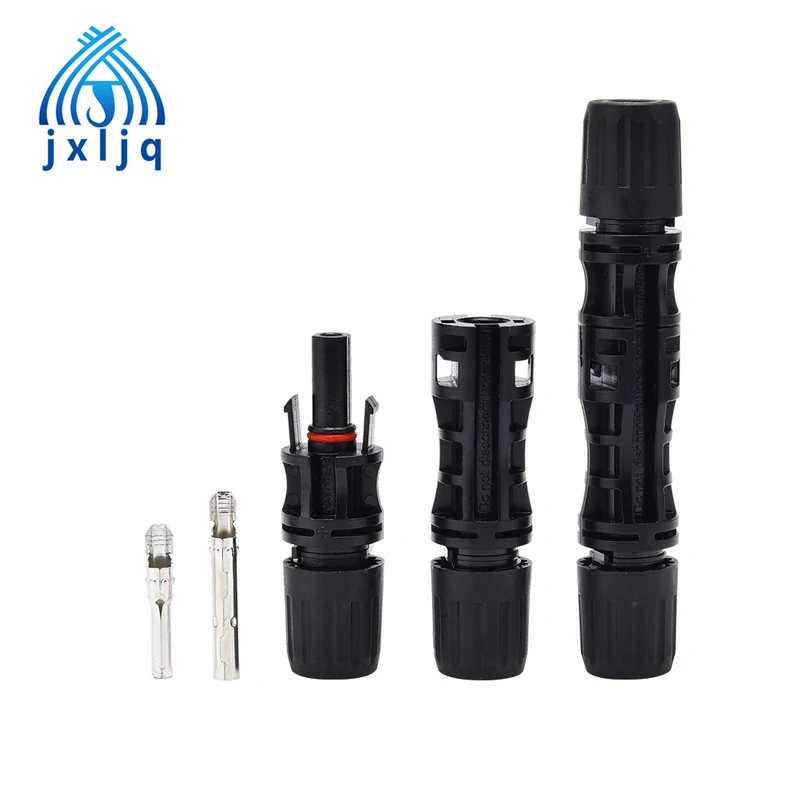
Yes—when the Solar Connector sits on a rooftop or ground-mount array exposed to rain, snow, and temperature swings for decades. The MC4 photovoltaic connector carries an IP68 rating, meaning it withstands dust ingress and continuous water immersion, while holding contact resistance at ≤0.5mΩ to keep power loss low across a 25-year service life. This article explains what the IP68 rating actually protects, how the contact system carries current without overheating, and what to verify when you're specifying connectors for a PV installation.
What Does IP68 Sealing Protect in a PV Array?
Dust, Water, and Thermal Cycling
A PV array lives outdoors. The connector at every module junction sees dust that settles on the panel surface, rain that runs down the frame, and condensation that forms when the temperature drops at night. If moisture reaches the contact interface, corrosion raises resistance, and the connection heats under load.
The IP68 rating on an MC4 connector means the housing is dust-tight and protected against continuous immersion in water. The internal sealing ring is typically made of silicone, and the housing is a UV-resistant engineering plastic. That combination keeps the contact chamber dry through years of outdoor exposure.
UV Resistance and Housing Material
The housing material matters as much as the sealing. UV radiation degrades standard plastics, causing them to crack and lose their sealing properties. MC4 connectors use UV-resistant housing material to prevent that degradation. The result is a connector that maintains its IP68 seal not just on installation day, but through the full service life of the array.
How Does the Contact System Carry Current?
Low Resistance and High Conductivity
The contact resistance of the industry-standard MC4 connector is ≤0.5mΩ. That figure defines how much energy is lost as heat at the connection point. A lower resistance means less voltage drop, less heating, and higher overall system efficiency.
The contacts are made from tinned copper, a material chosen for conductivity and corrosion resistance. The tinning protects the copper from oxidation while maintaining a low-resistance surface at the mating interface.
Current Ratings Across Cable Sizes
MC4 connectors are rated for different currents depending on the cable cross-section. A 2.5mm² cable carries 39A, a 4.0mm² cable carries 45A, and a 6.0mm² cable carries 53A. The connector must be matched to the cable size and the string current to avoid overheating.
| Parameter | MC4 Solar Connector |
|---|---|
| Contact resistance | ≤0.5mΩ |
| Protection rating | IP68 |
| Voltage rating | 1000V / 1500V DC |
| Current rating | 39A (2.5mm²), 45A (4.0mm²), 53A (6.0mm²) |
| Contact material | Tinned copper |
| Housing material | UV-resistant engineering plastic |
| Sealing material | Silicone O-ring |
| Locking mechanism | Snap-lock with "click" feedback |
| Operating temperature | -40°C to +90°C |
Why Does the Snap-Lock Mechanism Matter?
Accidental Disconnection and Arc Prevention
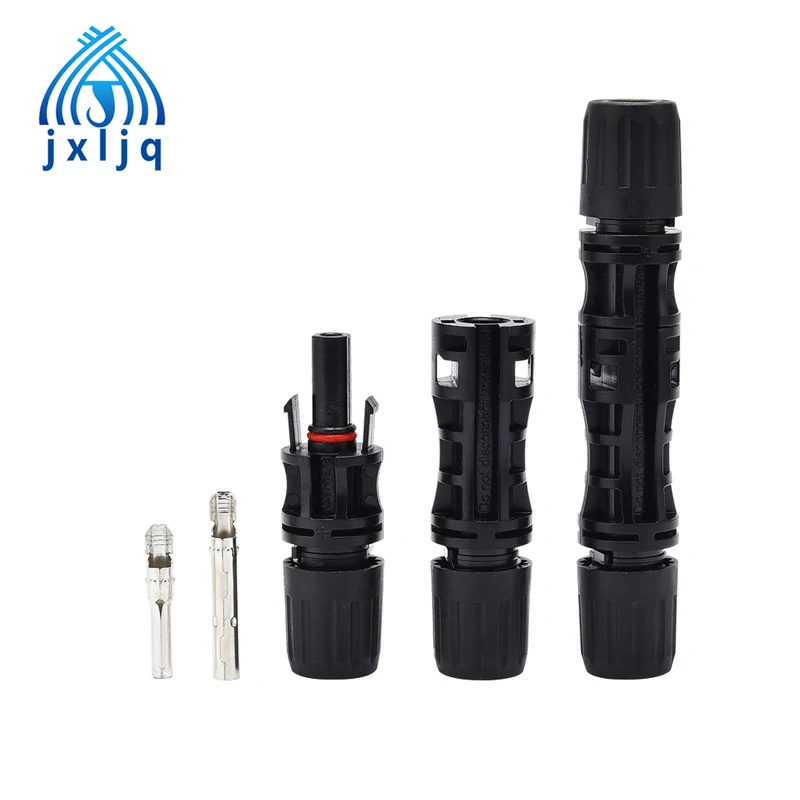
A PV array operates at high DC voltage, and a connector that separates under load creates an arc. The arc can damage the contact surfaces, start a fire, or expose the installer to a shock hazard. The MC4 connector uses a snap-lock mechanism with an audible "click" that confirms the connection is fully seated.
That locking design resists the vibration and wind loads that a rooftop array experiences. It also prevents the accidental disconnection that occurs when a cable is pulled or a panel shifts. The one-way locking design means the connector stays mated until the installer intentionally releases it.
Anti-Reverse Plug-In Design
The male and female housings use a special-shaped structure that prevents reverse polarity connections. That design prevents the installer from mating a positive lead to a negative lead, which would create a short circuit or damage the equipment. The mechanical keying makes the correct connection the only possible connection.
Where Does the MC4 Connector Fit in a PV System?
A Solar Connector in the MC4 format connects modules in series, strings in parallel, and arrays to inverters or combiner boxes. The connector carries the DC power from the panel to the next component in the chain.
The 1000V to 1500V DC rating covers residential rooftop systems and utility-scale arrays. The IP68 rating and the -40°C to +90°C temperature range cover the environmental conditions across most installation sites. The connector is designed for a service life of 25+ years, matching the expected life of the PV modules themselves.
What Should You Check Before Selecting a Connector?
How do I match the connector to my cable size?
The connector must accept the cable cross-section used in the string. MC4 connectors are compatible with 2.5mm² to 6mm² solar cables. Using a cable that's too small for the connector leaves gaps in the crimp; using one that's too large prevents the terminal from seating properly.
What voltage rating do I need?
The standard MC4 connector is rated for 1000V DC, and higher-specification versions handle 1500V DC. Match the voltage rating to the system's maximum DC voltage, not the nominal voltage. A 1500V system requires a 1500V-rated connector.
What maintenance do the connectors need?
MC4 connectors are designed to be maintenance-free once properly installed. The IP68 seal and the UV-resistant housing eliminate the need for periodic re-sealing. The main check is at installation: confirm the crimp is secure, the seal is in place, and the connector clicks when mated.
Straight Answers on MC4 Connectors
What's the difference between MC4 and MC3?
The MC4 connector uses a 4mm² contact pin, while the older MC3 used a 3mm² pin. The MC4 also added enhanced safety locks and easier installation. The MC4 has become the industry standard and occupies about 80% of the market share.
Can MC4 connectors be used outdoors?
Yes. The IP68 rating and the UV-resistant housing are designed specifically for outdoor use. The connector withstands rain, dust, and temperature extremes without losing its sealing or conductivity.
What happens if the connector gets wet?
The IP68 seal prevents water from reaching the contact interface. Even if the exterior of the connector is wet, the internal contacts remain dry. That's why the connector can be installed in exposed rooftop locations without an additional enclosure.
Do all MC4 connectors have the same contact resistance?
The industry-standard specification is ≤0.5mΩ, but the actual value depends on the manufacturer's material selection and crimping quality. A poorly crimped connector can have a much higher resistance, which leads to heating and power loss.
Let's Match a Connector to Your PV System
Share Your Cable Size, Voltage, and String Configuration
A Solar Connector built to the MC4 standard should match your cable cross-section, system voltage, and string current—not the other way around. The MC4 Photovoltaic Connector delivers IP68 sealing, ≤0.5mΩ contact resistance, 1000V/1500V DC ratings, and compatibility with 2.5mm² to 6mm² solar cables, with a snap-lock mechanism and UV-resistant housing for 25+ years of outdoor service. If you're specifying connectors for a rooftop or utility-scale PV installation, send us your cable size and system voltage — we'll help you confirm the right configuration before you order.