EN
EN
Does Your System Need an EMC Cable Gland?
You’re specifying components for an industrial control cabinet, an automation system, or a communications network. The cables entering the enclosure carry signals, power, and data. But the electromagnetic environment is noisy—motors, drives, and wireless transmitters create interference that can corrupt signals, cause false triggers, and compromise system performance.
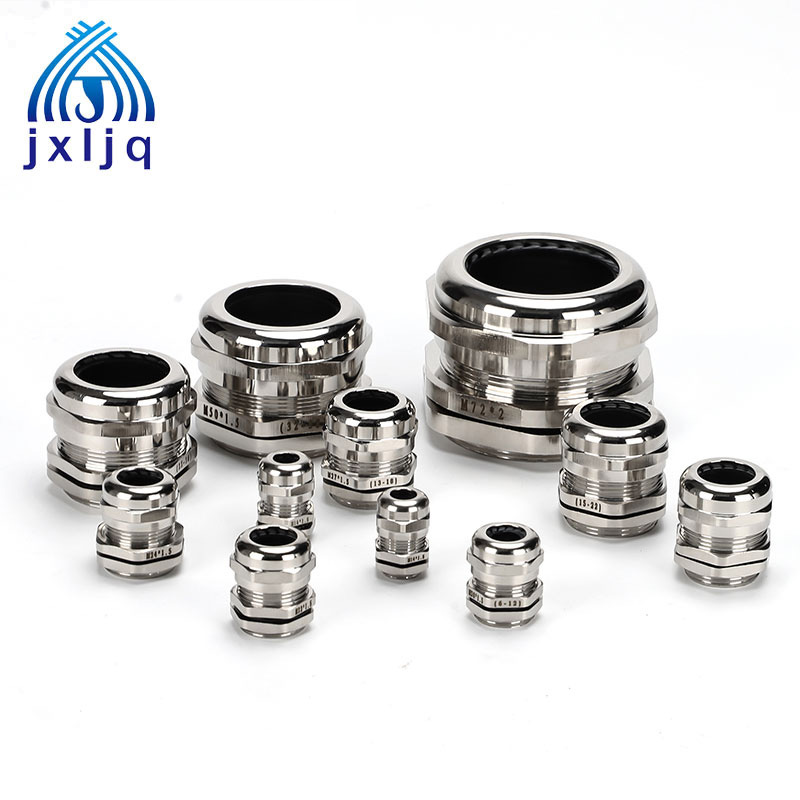
An EMC Cable Gland is the barrier between the shielded cable and the enclosure, maintaining the continuity of the cable shield at the entry point. Designed for electromagnetic compatibility, these glands use quality materials and precise manufacturing to ensure signal stability and resist interference. This guide helps you determine whether your system actually needs EMC cable glands, what signs indicate a problem, and how to make the right choice for your application.
Three Signs Your System Might Need EMC Protection
How do you know if EMC cable glands are necessary? Look for these indicators.
Intermittent Faults with No Obvious Cause
Intermittent faults are the hallmark of EMI problems. A sensor that occasionally gives false readings, a drive that trips for no reason, or a communication link that drops out randomly—these are classic symptoms of electromagnetic interference. If your system experiences unexplained faults, the cable entry point is a likely entry path for interference.
Proximity to High-Power Equipment
If your control cabinet is located near variable frequency drives, large motors, welding equipment, or radio transmitters, the risk of EMI is high. These sources generate significant electromagnetic fields that can couple into unshielded cable entries. Standard cable glands don‘t provide the shield termination needed to block this interference.
Sensitive Signal Types
If your system carries analog signals, low-level DC signals, or high-speed data, signal integrity is essential. EMI that might not affect a 24V control signal can corrupt a 4-20mA analog signal or a high-speed Ethernet link. For these applications, maintaining shield continuity at cable entry points is non-negotiable.
| Application Risk | EMI Risk Level | EMC Cable Gland Recommended? |
|---|---|---|
| Office environment, no VFDs | Low | Optional |
| Factory floor with VFDs and motors | Medium | Recommended |
| High-power drives (>100HP) | High | Required |
| Medical/communications equipment | Critical | Required |
The Hidden Weak Point — Standard Cable Glands at the Entry Point
Many engineers assume that using shielded cable alone is sufficient. It isn‘t.
The Shield That Doesn’t Terminate
A shielded cable is only as effective as its termination at the enclosure entry point. If the shield is not terminated correctly, it acts like an antenna—picking up interference and carrying it into the enclosure. A standard cable gland provides mechanical sealing and strain relief, but it doesn‘t maintain electrical continuity between the shield and the grounded enclosure.
How Interference Gets Through
Without proper shield termination, the interference that the cable was designed to block can enter the enclosure through the entry point. A gap of just a few millimeters in shield continuity can reduce shielding effectiveness by 20 dB or more. The result: the cable’s shield becomes ineffective exactly where it matters most.
The Grounding Path That Must Be Continuous
An EMC cable gland provides a continuous grounding path from the shield braid to the enclosure ground. This ensures that the interference is conducted to ground rather than being allowed to enter the enclosure. Quality EMC cable glands achieve shielding effectiveness of at least 86 dB in the frequency range from 30 MHz to 300 MHz.
What an EMC Cable Gland Actually Does
Understanding how an EMC cable gland works helps you decide if you need one.
360-Degree Shield Contact
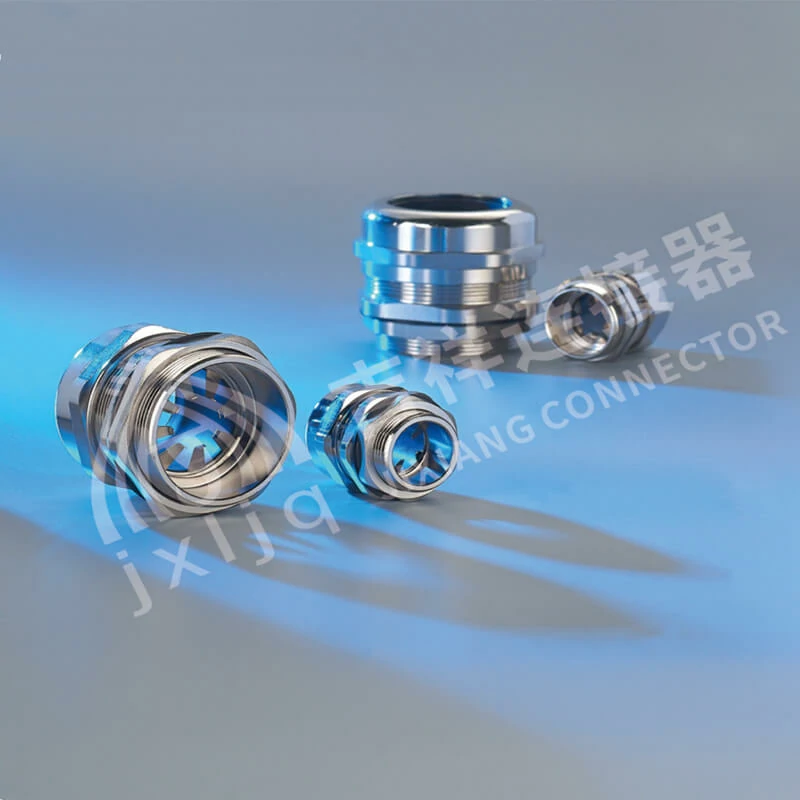
The key feature of an EMC cable gland is the 360-degree shield contact provided by the internal construction. When a shielded cable is inserted, the gland’s contact elements make continuous contact with the shield braid around the entire circumference of the cable. This ensures that the shield is terminated effectively, preventing interference from entering or exiting the enclosure.
Low-Impedance Path to Ground
The nickel-plated brass construction provides a low-impedance path from the shield to the enclosure ground. The brass body combines the conductivity needed for effective EMI suppression with the corrosion resistance of nickel plating. The result is a dependable grounding path that lasts.
Sealing and Shielding in One Component
Beyond EMC protection, these glands provide IP68 sealing against dust ingress and continuous immersion in water. For applications in wet, dusty, or outdoor environments, the combination of EMC protection and IP68 sealing is essential. One component does the job of two—simplifying installation and reducing component count.
When You Might Not Need an EMC Cable Gland
Not every application requires EMC protection. Here‘s when you can skip it.
Low-Noise Environments
If your equipment is installed in a clean, low-noise environment—such as a well-filtered office or a residential building—the risk of EMI may be minimal. Standard cable glands may be sufficient for simple control applications where signal integrity is not critical.
Systems Without Shielded Cables
If you’re not using shielded cables at all, EMC cable glands won‘t add value. An EMC gland is designed to terminate a cable shield; without a shielded cable, there’s no shield to terminate. Using shielded cables with standard glands is the most common waste of the benefit.
Applications with Isolated Grounding
In some applications, the enclosure ground and the cable shield are intentionally isolated for other reasons. In these cases, maintaining shield continuity may not be necessary. However, this is a specialized application that should be reviewed with an EMC engineer.
| System Characteristic | EMC Cable Gland Needed? |
|---|---|
| Shielded cables + noisy environment | Yes |
| Shielded cables + quiet environment | Recommended |
| No shielded cables | No |
| Data/analog signals + noise | Yes |
| DC power only | Usually not |
Common Questions About EMC Protection at Cable Entry
What is the difference between an EMC cable gland and a standard cable gland?
A standard cable gland provides sealing and strain relief but does not maintain the continuity of the cable shield. An EMC cable gland is specifically designed to provide 360-degree contact with the cable shield, creating a low-impedance path to ground. This ensures that the shielding effectiveness of the cable is maintained at the entry point, preventing EMI from entering or leaving the enclosure.
What shielding effectiveness can I expect from an EMC cable gland?
Quality EMC cable glands achieve shielding effectiveness of at least 86 dB in the frequency range from 30 MHz to 300 MHz. This level of attenuation ensures reliable protection against high-frequency interference from DC/DC converters, AC inverters, and other sources. For applications with strict EMC requirements, this performance is essential.
Can an EMC cable gland be used outdoors?
Yes. EMC cable glands are rated IP68, providing protection against dust ingress and continuous immersion in water. The nickel-plated brass construction resists corrosion, and the temperature range of -40°C to 100°C covers most outdoor applications. For installations in exposed locations, EMC cable glands offer both EMI protection and environmental sealing.
Are EMC cable glands available in different thread sizes?
Yes. EMC cable glands are available in a range of Metric, PG, G and NPT thread sizes to match different cable diameters and enclosure entry points. When selecting a gland, verify that the thread size matches your enclosure and that the cable diameter falls within the gland‘s clamping range.
Built by a Manufacturer You Can Trust
Behind every reliable EMC cable gland is a manufacturer that understands the importance of quality, precision, and consistency.
JIXIANG Connectors has over 15 years of experience in waterproof cable connector manufacturing. The company has invested heavily in quality testing facilities to ensure that every product that leaves the factory meets high standards. Their EMC cable glands are designed and manufactured for a variety of environments.
The product features and benefits include high durability, ease of installation, strong resistance to harsh environments, and support for customization. Technical resources—including data sheets, installation guides, and FAQs—are available to help customers understand the technical aspects of the products.
Schedule an EMC Protection Assessment
An EMC cable gland is a critical component for maintaining signal integrity in industrial control, automation, and communications applications. The right gland provides 360-degree shield contact, IP68 sealing, and a -40°C to 100°C operating range—ensuring that your shielded cables perform as designed at every entry point.
Contact JIXIANG Connectors‘ team to schedule a comprehensive EMC protection assessment for your facility, discuss your specific application requirements, and get the right EMC cable gland configuration for your project.