EN
EN
Choose Stainless Steel for Your Waterproof Cable Gland?
A chemical plant loses a pump because water entered the terminal box through a failed cable gland. A marina’s shore power connection corrodes after one season, leaving boats without charging. An outdoor lighting system flickers intermittently—salt spray has degraded the rubber seal. These failures all trace back to the same overlooked component: the cable entry point.
A Waterproof Cable Gland is not a commodity fitting. It is the last line of defense between your electrical system and the environment. When it fails, moisture and dust enter enclosures, corrosion starts at terminals, and equipment fails prematurely. This guide explains how to choose between stainless steel grades, what IP ratings actually mean in the field, and the installation practices that keep seals intact for the life of your equipment.
Stainless Steel Grade: 304 vs. 316 – A Decision That Determines Service Life
The first and most important choice is material. Not all stainless steel performs the same in aggressive environments. Most stainless steel cable glands are made from grade 304 or grade 316 stainless steel, offering exceptional corrosion resistance, mechanical strength, and durability.
Grade 304 (18/8 chromium‑nickel). The standard choice for general outdoor and industrial use. 304 resists rust in humid environments and is suitable for most applications where salt exposure is minimal. It is less expensive than 316 and adequate for indoor, sheltered outdoor, and light industrial installations.
Grade 316 (marine grade). Contains molybdenum, which dramatically improves resistance to chlorides and salt. For coastal installations, marine environments, chemical plants, and anywhere deicing salts or sea spray are present, 316 is essential.
How to tell them apart in the field. Both grades look similar. Request material test reports or look for laser‑etched markings. If the application involves saltwater, brine, or persistent chlorides, specify 316 explicitly. For inland industrial environments with occasional moisture, 304 is sufficient.
IP Ratings Decoded: What IP66, IP67, and IP68 Actually Mean
IP (Ingress Protection) ratings define how well a cable gland resists dust and water. A stainless steel Waterproof Cable Gland typically carries IP66, IP67, or IP68 ratings—but these numbers are often misunderstood. IP66 means dust‑tight and protected against powerful water jets (hose‑down). IP67 means dust‑tight and protected against immersion up to 1 meter for 30 minutes. IP68 means dust‑tight and protected against continuous immersion under specified conditions—typically tested at 5 bar water pressure or 30 meters for 7 days. For most outdoor applications, IP66 is adequate for rain and washdown. IP67 or IP68 is required for equipment subject to flooding, submerged cables, or condensate‑prone enclosures. Check the manufacturer’s test conditions; “IP68” alone is incomplete without the immersion depth and duration.
Thread Compatibility: Metric, PG, and NPT – Getting the Fit Right
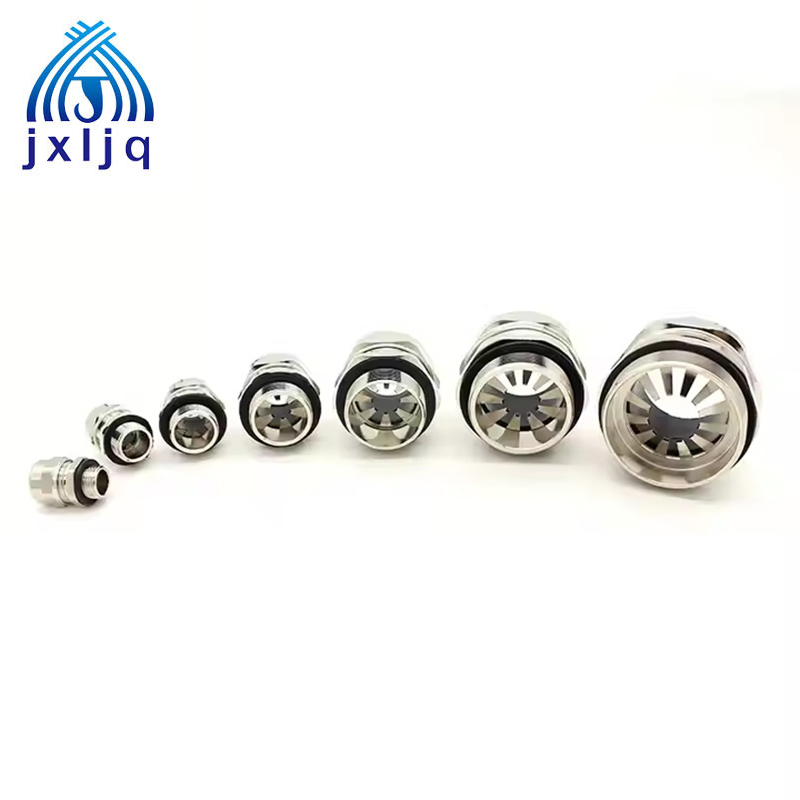
Choosing the wrong thread type is a common field error. Metric threads (M12 to M63) are standard in European and Asian equipment, with 1.5mm pitch. PG threads are older German standard, less common in new designs. NPT (National Pipe Taper) threads are standard in North America. A metric gland will not seal in an NPT port, and vice versa. For existing equipment, check the enclosure thread before ordering. For new installations, specifying metric with an appropriate locknut is the most straightforward approach for global compatibility. The Waterproof Cable Gland catalog typically lists thread options clearly; verify before purchase. Cross‑threading or mismatched threads is a leading cause of field leaks.
Installation: Where Most IP Failures Start
A correctly specified stainless steel cable gland will fail if installed incorrectly. The most common mistakes are over‑tightening, under‑tightening, and mismatched cable diameters.
Torque control. Use a torque wrench set to the manufacturer‘s specification. For a typical M20 stainless steel cable gland, the recommended tightening torque is 3.5–4.0 Nm for the sealing nut; for larger sizes (M32‑M50), torque increases to 8‑10 Nm. Excessive torque crushes the cable and damages the sealing ring; insufficient torque leaves a path for moisture. For NPT threads, tighten “wrench tight” plus a quarter turn, then apply a thread sealant to maintain the IP rating.
Cable diameter matching. The gland’s sealing range is critical. A cable that is too thin will not compress the seal; a cable too thick will not fit or will bulge the seal. Always verify that the actual cable diameter falls within the gland’s specified clamping range. The sealing ring must contact the cable sheath uniformly—gap or uneven pressure will cause leaks.
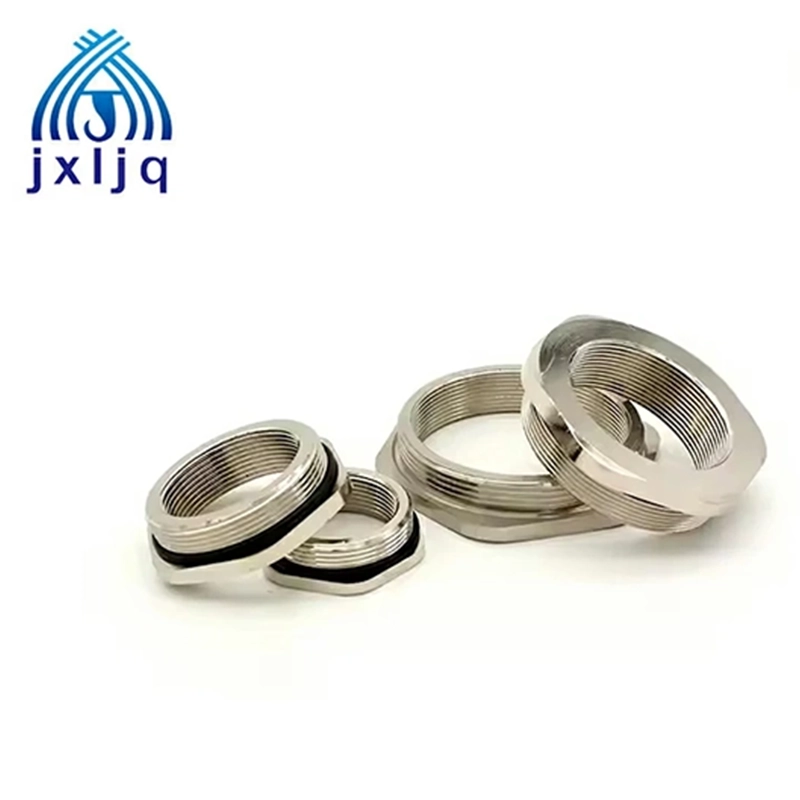
Locknut and O‑ring seating. The locknut must be tightened against the enclosure wall, not the body. The O‑ring or gasket between the gland body and enclosure creates the panel seal. If the locknut is over‑tightened, the O‑ring extrudes and loses sealing ability. Use a backup wrench on the gland body to prevent co‑rotation while tightening the locknut.
Material and Sealing Element Compatibility
The stainless steel body is only part of the seal. The rubber components determine the chemical resistance and temperature range of the assembly.
Sealing materials. Standard sealing rings are EPDM, which provides good resistance to water, steam, and mild chemicals but degrades in oils and fuels. For applications with oil, grease, or fuel exposure, specify silicone or Viton (FKM) seals. The operating temperature range of standard sealing rings is typically -40°C to +120°C; with proper selection, the assembly can withstand -60°C to 200°C.
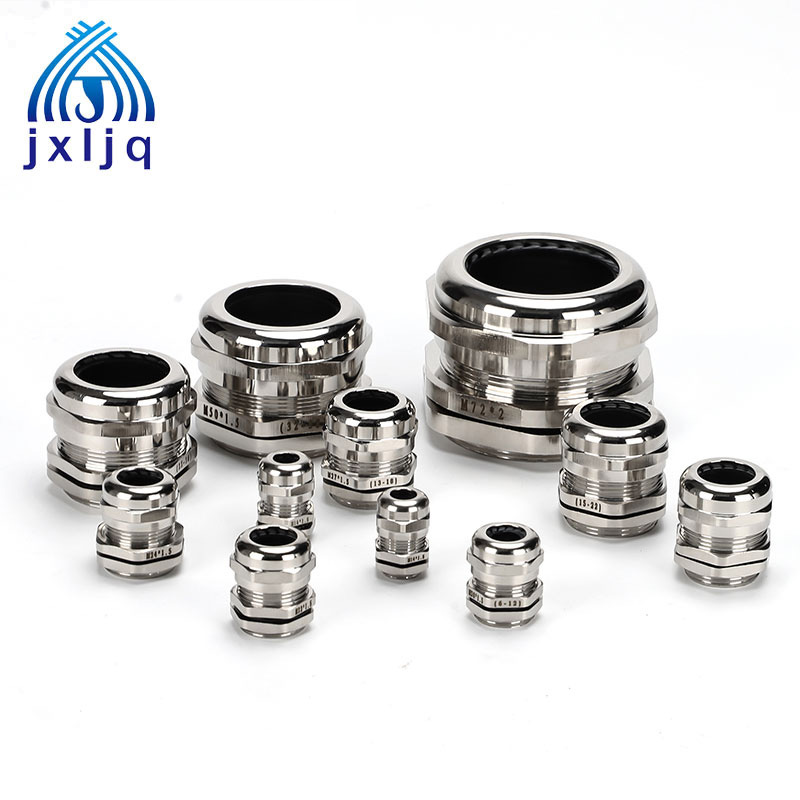
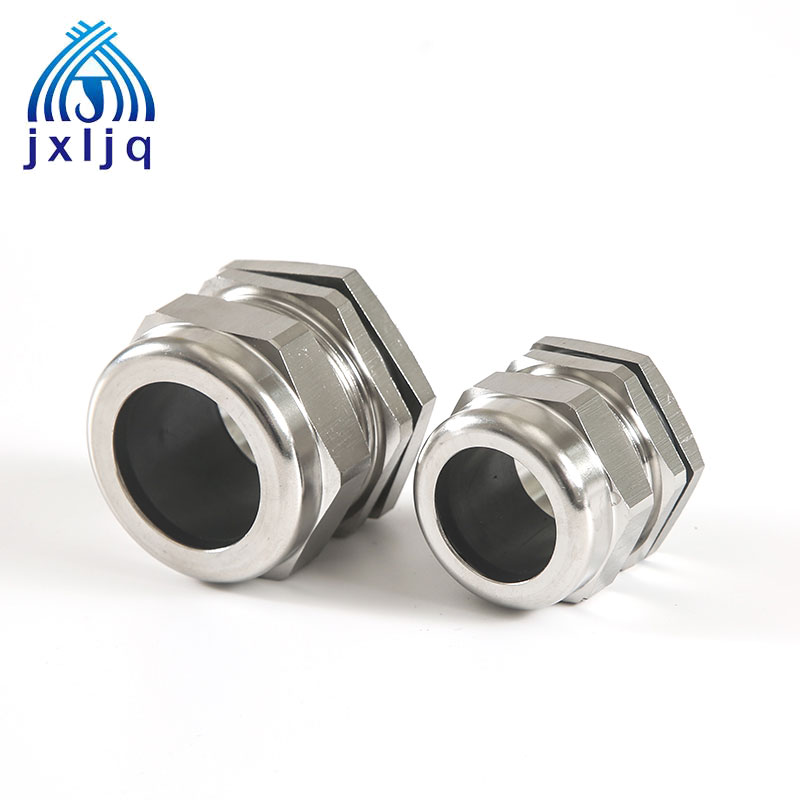
Gland body finishes. Stainless steel does not require plating. However, nickel‑plated brass is a common lower‑cost alternative. For environments where corrosion is the primary concern, stainless steel is superior. The claws and seals in well‑designed stainless steel glands hold cables firmly and accommodate a wider cable range, resistant to salt water, weak acid, alcohol, oil, grease, and common solvents.
Common Field Failures and How to Avoid Them
Failure: Water inside the enclosure after a rainstorm. Check the panel seal—the O‑ring between the gland body and the enclosure. If the locknut was over‑tightened, the O‑ring may be extruded or split. Replace the O‑ring and retorque to spec. Also verify that the cable sheath is intact; a nick in the jacket creates a capillary path for water.
Failure: Intermittent electrical faults after temperature cycles. The cable may be undersized for the gland’s sealing range. When the cable heats, it expands; when it cools, it contracts, breaking the seal. Replace the gland with one matched to the exact cable diameter, or use a gland with a wider sealing range.
Failure: Rust stains on a stainless steel gland. If the gland is 304 stainless steel in a saltwater environment, surface rust may appear. This is not a manufacturing defect; 304 has limited chloride resistance. Replace with 316 stainless steel. If rust appears on 316, the surface may be contaminated with embedded iron particles from tooling—clean with a passivation solution.
Failure: The sealing nut spins without tightening. The threads may be stripped from over‑tightening or cross‑threading. Replace the gland. Do not use thread sealant as a substitute for correct torque.
Questions from Installers and Maintenance Teams
Q: Can I use a stainless steel waterproof cable gland for direct burial applications? A: Yes, provided the gland carries an IP68 rating and is installed with a sealing compound or heat‑shrink tube over the assembly. The cable jacket must also be rated for direct burial. For extended submersion, consult the manufacturer’s IP68 test conditions.
Q: How do I know if a stainless steel cable gland is genuine 316 stainless steel? A: Request the material test report from the supplier. In the field, a simple magnet test is inconclusive—316 is non‑magnetic after cold working. For critical installations, use a PMI (Positive Material Identification) tester to confirm alloy composition. JIXIANG Connectors provides technical data sheets and certification documentation for their products.
Q: Can the same gland be reused if the cable is removed? A: The gland body can be reused, but the sealing ring should be replaced. Once compressed, the rubber seal may not recover its original shape, and reusing it risks a poor seal. For critical installations, replace the entire gland to ensure IP integrity.
JIXIANG’s Approach to Stainless Steel Cable Glands
When a Waterproof Cable Gland must survive in corrosive environments while maintaining a perfect seal, material quality and precision machining make the difference. JIXIANG Connectors manufactures stainless steel cable glands in both 304 and 316 grades, with metric threads from M8 to M100 and cable ranges from 2mm to 84mm. All glands are IP66‑IP68 rated and tested to maintain sealing integrity under vibration and thermal cycling. JIXIANG provides material certifications, torque specifications, and sealing element options (EPDM, silicone, Viton) to match the demands of marine, industrial, and outdoor applications. For installers and maintenance teams, JIXIANG offers technical datasheets, installation guides, and fast‑response spare parts support.
→ Request a quote from JIXIANG Connectors for the Stainless Steel Cable Gland — Share your required thread size (M, PG, NPT or G thread), cable diameter, environmental conditions (saltwater, chemical exposure, temperature range), and preferred grade (304 or 316). Their technical team will recommend the right gland configuration and provide torque specifications for your specific application.