EN
EN
What Makes a Waterproof Cable Gland Truly Reliable?
You've seen what happens when a cable gland fails. Water finds its way into a junction box. Corrosion creeps along the conductors. A short takes out a lighting circuit, a control panel, or worse — a piece of critical equipment. The component that failed cost a few dollars. The downtime cost thousands.
A waterproof cable gland isn't the most expensive part of an electrical installation, but it's one of the most important. It's the seal that keeps moisture, dust, and contaminants out of your enclosures. It's the strain relief that protects cables from pulling loose. And when it fails, everything else is at risk. JIXIANG's brass cable glands are engineered for the environments where this matters most — marine vessels, petrochemical plants, charging stations, and industrial machinery. This guide covers what makes a cable gland reliable, where different types are used, and what to look for when you're specifying them for your next project.
Where waterproof cable glands earn their keep
A cable gland isn't the same everywhere. The requirements for a lighting fixture on a building exterior are different from those for a petrochemical pipeline. Matching the gland to the environment is the first step in getting it right.
Marine and offshore environments
Saltwater is corrosive. Humidity is constant. Vibration is everywhere. On a supply ship, sealed connectors are used for internal fire-fighting pipelines and liquid pipelines, connecting multiple internal devices to ensure stable operation. For marine applications, the gland needs more than just a seal — it needs corrosion resistance that stands up to salt spray. Nickel-plated brass construction provides that protection. IP68-rated glands are standard for applications where water exposure is continuous or where the gland may be submerged.
Petrochemical and industrial facilities
In oil storage and transportation pipelines, connectors must provide flexible installation, lower working pressure requirements, and effective tensile stress at equipment connections. These environments combine moisture, chemical exposure, and physical stress. The gland must seal against water while also resisting chemical attack. Brass construction with suitable sealing materials (EPDM or NBR rubber) handles this combination.
Outdoor lighting and electrical enclosures
Streetlights, security cameras, and outdoor electrical boxes all need cable entry points that keep water out. IP68-rated glands are commonly used in construction and electrical engineering because they provide protection that's resilient to the outdoors and harsh environments. The gland seals the cable entry point, preventing moisture from tracking along the cable into the enclosure.
Charging stations and renewable energy
New energy connectors ensure the high-voltage interconnection system of electric vehicles — building a bridge where the internal circuit is blocked or isolated, so that current can flow. Waterproof glands play a pivotal role in maintaining uninterrupted power delivery and protecting sensitive equipment in renewable energy installations. Solar and wind power systems are often exposed to the elements, and the cable entry points are vulnerable points that need reliable sealing.
What makes a brass cable gland different
Brass isn't the only material used for cable glands, but it's the one that shows up in demanding applications. Understanding why helps you specify the right product.
Conductivity, corrosion resistance, and temperature tolerance
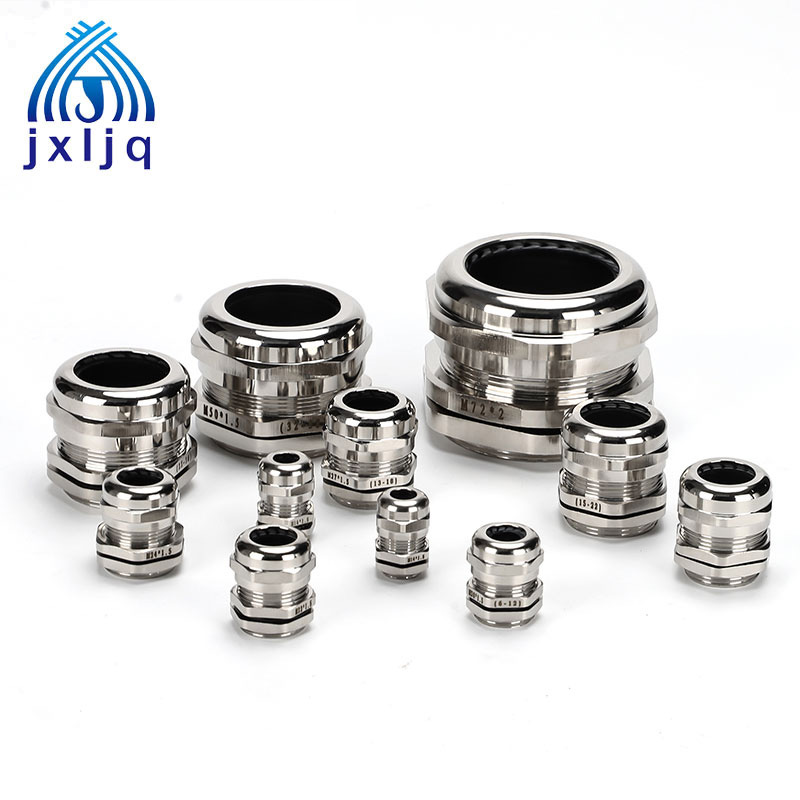
JIXIANG brass cable glands are finely processed and have good conductivity, corrosion resistance, and high temperature resistance. That combination of properties makes brass suitable for connection needs in a wide range of scenarios. In electrical applications, conductivity matters because the gland often provides the grounding path. Corrosion resistance matters because the gland sits at the boundary between the protected enclosure and the outside environment. Temperature tolerance matters because industrial and outdoor environments see extreme conditions.
IP68 — what it actually means
IP68 is the highest common ingress protection rating for cable glands. It means the gland is dust-tight (the "6") and protected against continuous immersion in water (the "8"). An IP68-rated gland can be submerged under specified conditions without water entering the enclosure. For outdoor lighting, marine applications, and petrochemical facilities, this level of protection is often non-negotiable. JIXIANG's brass cable glands deliver IP68-rated sealing with EPDM or NBR rubber seals.
Nickel plating — the corrosion barrier
The brass body is typically nickel-plated. This isn't cosmetic — it's functional. Nickel plating provides an additional corrosion barrier that protects the brass from oxidation and chemical attack. For applications in saltwater environments or chemical plants, nickel-plated brass is the standard.
Below is a quick reference table for application requirements:
| Application | Key Requirement | Recommended Feature |
|---|---|---|
| Marine / offshore | Saltwater resistance | Nickel-plated brass, IP68 |
| Petrochemical | Chemical resistance | Brass body, EPDM seal |
| Outdoor lighting | Weatherproofing | IP68, UV-resistant seal |
| Charging stations | High voltage, outdoor exposure | Brass, IP68, temperature-rated |
| Industrial machinery | Vibration, strain relief | Brass, secure cable grip |
What to look for when sourcing cable glands
For procurement managers and engineers, the decision isn't just about price. It's about performance, reliability, and supply chain consistency.
Certifications and compliance
JIXIANG's products cover a wide range of international installation codes from IEC to NEC. This matters because your installation needs to meet local electrical codes. A gland that isn't certified to the relevant standard creates liability. Ask for certification documentation before you commit to a supplier.
Quality assurance and testing
A reliable supplier invests in quality testing. JIXIANG has invested heavily in quality testing facilities to ensure that every product that leaves the factory meets high standards. This isn't just marketing — it's the difference between a gland that seals for years and one that fails in months. Ask about testing procedures and whether the supplier can provide test reports for specific production batches.
Customization capability
Standard cable glands work for standard applications. But industrial projects often have non-standard requirements — different thread sizes, custom cable diameter ranges, or specific material specifications. JIXIANG supports customization of cable glands and fittings. If you're sourcing for a project with unique requirements, customization capability matters more than off-the-shelf availability.
Technical support and documentation
A supplier that provides technical resources — data sheets, installation guides, FAQs — is a supplier that understands its customers' needs. JIXIANG makes technical resources available to help customers understand the technical aspects of the products. For engineers specifying components, this documentation is essential. For procurement managers, it's evidence that the supplier takes quality seriously.
Questions procurement and engineering teams ask
Q: What's the difference between IP68 and IP67 for cable glands?
A: Both are dust-tight. The difference is water protection. IP67 protects against temporary immersion in water up to 1 meter for 30 minutes. IP68 protects against continuous immersion beyond 1 meter, with conditions specified by the manufacturer. For outdoor lighting and most industrial applications, IP67 is often sufficient. For marine environments, submerged applications, or areas with frequent flooding, IP68 is the right choice. JIXIANG brass cable glands are IP68-rated.
Q: Can brass cable glands be used with all cable types?
A: Brass cable glands are suitable for unarmoured and certain armoured cables. For flexible braided cables like SY or CY types, specific glands are available that clamp the wire braid for electrical continuity and mechanical retention. When specifying, match the gland to the cable type — unarmoured, braided armour, or steel wire armoured. The sealing mechanism and grip differ for each cable construction.
Q: How do I know which thread size and cable diameter range I need?
A: Start with the cable diameter — the gland must accommodate the outer diameter of the cable you're using. Then match the thread size to the enclosure's knockout or the conduit fitting. Common thread sizes include M12 through M50 and PG sizes. JIXIANG supports customization, so if you have non-standard requirements, their technical team can help specify the right configuration.
Q: What is the operating temperature range for brass cable glands?
A: The static operating temperature ranges from -40°C to +100°C, with instantaneous heat resistance up to 120°C. This covers most industrial and outdoor environments. For extreme temperature applications — furnace areas or cryogenic environments — confirm the specific rating with the supplier.
Why JIXIANG connectors are built for demanding applications
JIXIANG designs and manufactures cable glands and fittings for a variety of environments, covering a wide range of international installation codes from IEC to NEC.
The brass cable glands are finely processed with good conductivity, corrosion resistance, and high temperature resistance. They're suitable for connection needs in construction, power equipment, and machinery manufacturing, providing stable and durable connections. Applications include lighting systems, charging stations, petrochemical pipelines, and marine vessels.
Quality assurance is built into the process — the company has invested in quality testing facilities to ensure every product meets high standards before leaving the factory. Technical resources including data sheets, installation guides, and FAQs are available to help customers understand the technical aspects of the products.
For procurement managers, the combination of material quality (brass with nickel plating), certification coverage (IEC to NEC), customization support, and testing infrastructure makes JIXIANG a supplier worth evaluating. Before you commit to a large order, request samples and test them in your actual installation conditions. A cable gland that seals in the lab but fails in the field isn't worth the savings.
Specifying cable glands for an industrial or outdoor project? Contact JIXIANG for a quote or technical consultation on the brass flexible cable gland. Share your application environment, cable type, and required thread sizes — their team can recommend the right configuration and provide installation guidance for your specific requirements.