EN
EN
How to Select an Explosion-Proof Cable Connector
In a chemical plant last year, an operations supervisor noticed a faint hissing sound near a mixing vessel. The thermal reading was normal. The vibration levels looked acceptable. But the inspection report later identified a tiny gap in an improperly fitted cable entry point. Fortunately, the line was shut down for maintenance before any gas could migrate into the control panel.
According to industry analysis, the biggest cause of failure in electrical equipment for hazardous areas is the ingress of water or moisture, leading to corrosion and circuit bridging . Given that cable glands are often wrongly considered as simple electrical ancillaries—when in fact they are vital components that must maintain the protection levels of the equipment they are attached to —it is crucial to evaluate potential failure points carefully.
So, how do you avoid becoming another statistic when upgrading equipment in a volatile environment? The decision goes far beyond finding a component that simply “screws in.” It requires a systematic evaluation of mechanical strength, chemical resistance, and long-term reliability.

Step 1: Match the Thread Type Before You Do Anything Else
One of the most overlooked mistakes is assuming all industrial threads are universal. A metric thread (M20, M25) is common in European-designed machinery, while NPT (National Pipe Taper) threads dominate North American installations . These two systems are not interchangeable. Forcing an NPT fitting into a metric entry will either crack the housing or leave insufficient engagement, creating a direct path for flammable dust or gas. As one industry expert notes, “Using the wrong size of the gland for the cable can cause issues—if the gland is too large, it won‘t grip the cable tightly” .
Your first check should always be the entry thread on your junction box or equipment enclosure. If you are unsure, use a dedicated thread gauge. For environments with high vibration—such as reciprocating compressors or shaker screens—look for a construction that offers a longer thread engagement zone. This distributes clamping force more evenly and reduces the risk of loosening over time.
If you need to verify the exact thread specifications for your current project, click here to view the thread dimension guide .
Step 2: Evaluate the Sealing Mechanism – Not All Gaskets Perform the Same
Once the thread is confirmed, the next question is: how does this device seal against the cable jacket? There are two common approaches. The first uses a simple rubber grommet compressed by a closing nut. This works well for static applications with standard round cables. But over time, thermal cycling can cause the rubber to lose its original clamping force.
A more robust design employs a tapered cone or multi-finger claw that bites uniformly around the cable’s circumference. This mechanical grip maintains pressure even when temperatures fluctuate.
According to technical specifications for high-quality industrial cable glands, a properly designed unit should maintain an IP68 protection rating up to 10 BAR of pressure, with an operating temperature range of -40°C to +100°C in static state . For armored cables—frequently found in long-distance runs between a refinery’s DCS system and field instruments—you also need a separate grounding mechanism. The armor must be terminated and bonded correctly to maintain the electrical continuity of the grounding circuit .
Step 3: Understand the Certification Marks (ATEX, IECEx, and Class/Division)
Here is where many procurement lists get simplified incorrectly. You will see markings like “Ex db” or “Ex eb.” The “d” stands for flameproof (enclosure can contain an internal explosion), while “e” stands for increased safety (preventing sparks and high temperatures under normal operation). These are not interchangeable.
If your application involves Zone 1 (explosive atmosphere likely to occur during normal operation), you typically require an Ex d or Ex e rating with a high protection level (Gb). For Zone 2 (atmosphere unlikely or short duration), an Ex n type may be sufficient.
The latest edition of IEC 60079-0 (Edition 7), published at the end of 2017, introduced a major technical change: cable gland manufacturers must now supply the installer with detailed information on how to seal the interface between the cable gland and the equipment . This includes thermal conditioning tests for sealing gaskets before certification. A common industry pitfall is trusting a generic “CE” mark, which is a manufacturer’s self-declaration, versus a verified ATEX or IECEx certificate issued by a notified body.
Step 4: Material Selection – Brass, Stainless Steel, or Plastic?
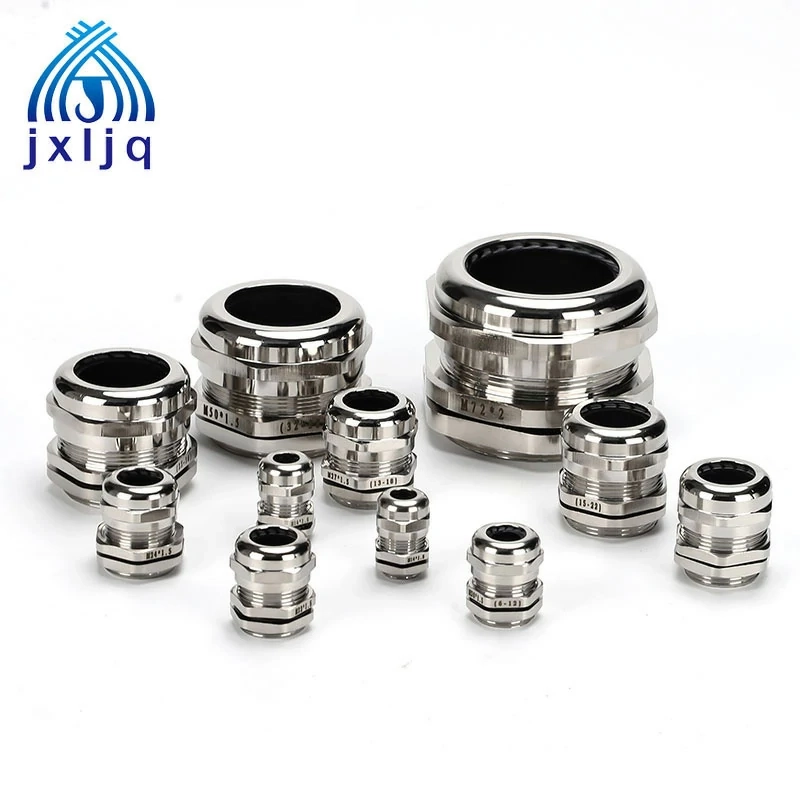
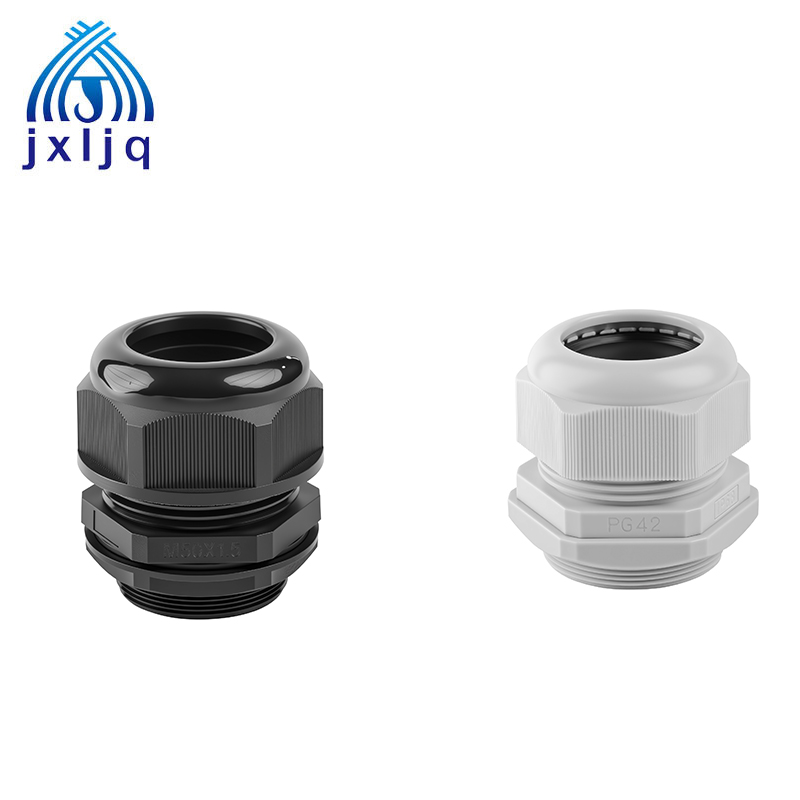
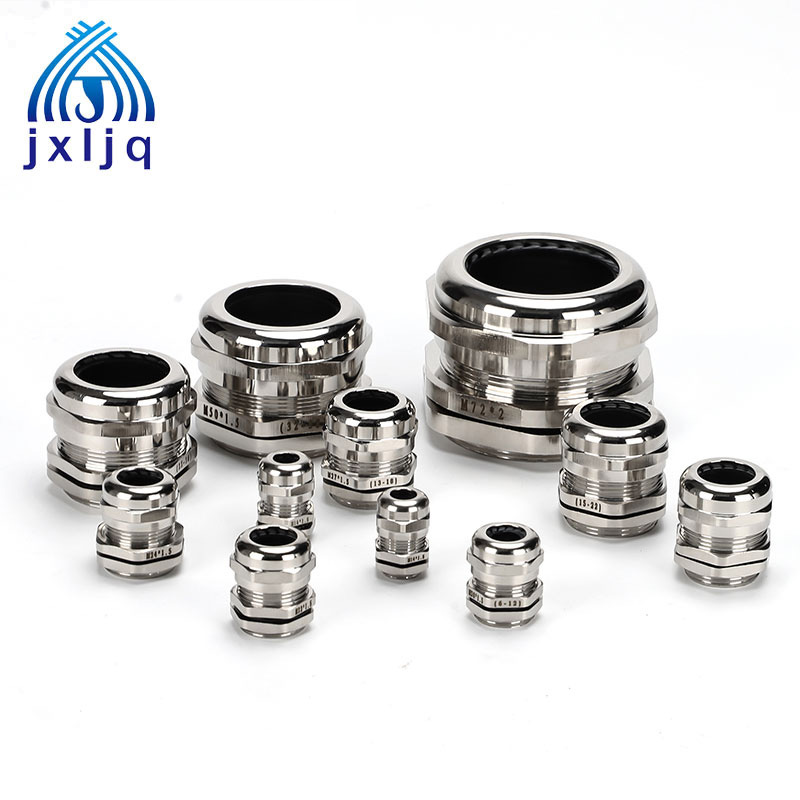
Environmental factors dictate material choice. Standard nickel-plated brass offers excellent machinability and good corrosion resistance for indoor chemical labs or basic industrial plants. For offshore platforms or wastewater treatment facilities where chloride exposure is constant, you need 316 stainless steel. It resists pitting and crevice corrosion far better than brass.
For corrosive environments, NEMA 4X-rated enclosures (roughly IP66 equivalent) require additional corrosion protection that standard nickel-plated brass cannot provide . Polyamide (plastic) versions exist for lightweight or less demanding environments. However, some plastics degrade under UV exposure or become brittle in sub-zero temperatures.
To explore the available material options and their technical data sheets, see the stainless steel series details here .
Step 5: Verify Ingress Protection (IP) vs. Actual Installation
You often see IP66 or IP68 printed on the datasheet. But there is a difference between laboratory testing and real-world installation. An IP68 rating means the device is suitable for continuous immersion under conditions specified by the manufacturer.
However, for Ex-certified products, the manufacturer must have their cable glands certified with an IP rating shown on the certificate. To achieve an IP rating higher than IP54, the cable gland must first be thermally conditioned according to IEC 60079-0 and then subjected to pull-out loads, torque testing, and impact tests before IP tests are conducted . If a gland‘s Ex certificate does not show an IP rating, then only the minimum IP54 rating can be claimed for hazardous areas .
When performing your final check, pay attention to the “accessory kit.” A high-quality device arrives with a proper backup nut, a locking washer, and a pliable O-ring for the enclosure entry.

Common Installation Errors to Avoid
Even the best-selected device fails with poor installation. Do not exceed the recommended torque. Over-tightening can strip the threads or deform the inner seal. Also, always leave a small drip loop before the cable enters the fitting. This simple practice prevents water from running straight down the cable jacket and into the seal.
A documented case from the industry highlights the consequences of improper selection: a site had 16 incorrectly specified and installed cable glands which failed to provide adequate mechanical retention due to being oversized for the cable diameter. The vibrations from generators caused the glands to loosen dangerously from the gland plate .
The Final Step: Verification and Documentation
After installation, take a photo of the installed assembly for your maintenance records. Note the date, the torque value used, and the cable type. This traceability is invaluable during a regulatory audit. For plants following structured safety management systems, having a consistent brand across multiple entry points simplifies spare parts inventory and worker training.
If you are currently standardizing the wiring safety for a new modular plant or retrofitting an older facility, having a reliable product partner simplifies the process. Jixiang focuses on providing consistent, certified solutions for these specific hazardous-area challenges. Their range covers the most common thread types and material grades needed for chemical, oil, and gas applications .
Instead of spending weeks sampling multiple suppliers to find one that offers both the right certification and on-time delivery, you can get a tailored selection recommendation here . The right fitting does not just complete a circuit—it secures an operation.